- Classification
- ACTINOPTERYGII
- STOMIIFORMES
- STERNOPTYCHIDAE
- Sternoptyx
- pseudobscura
Highlight Hatchetfish, Sternoptyx pseudobscura Baird 1971
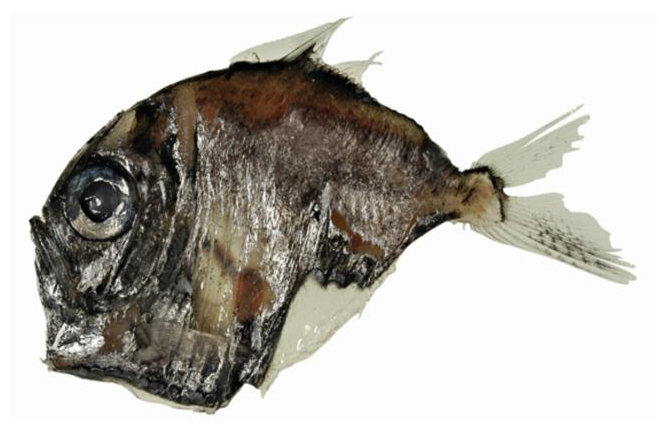
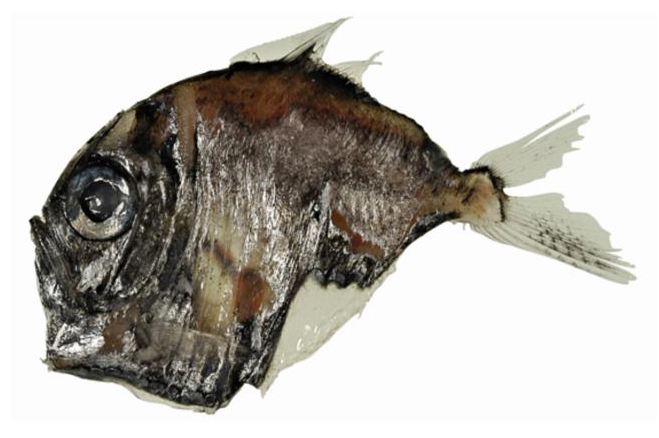
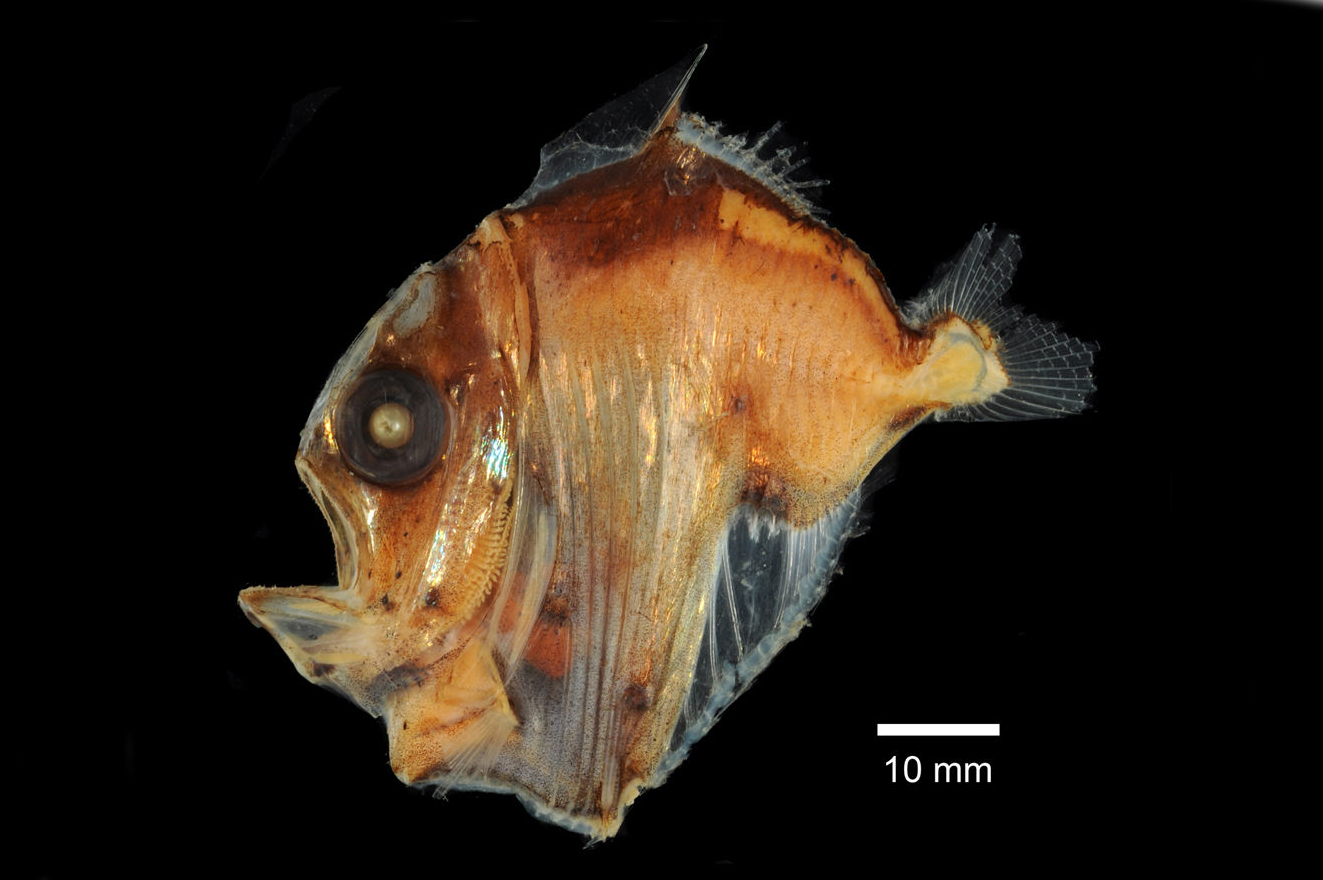
Highlight Hatchetfish, Sternoptyx pseudobscura. Source: Australian National Fish Collection, CSIRO. License: CC BY Attribution-Noncommercial
Summary:
body somewhat uniformly dark, pigment absent or in very narrow band at base
Cite this page as:
Bray, D.J. 2025, Sternoptyx pseudobscura in Fishes of Australia, accessed 18 Oct 2026, https://fishesofaustralia.net.au/Home/species/4542
Highlight Hatchetfish, Sternoptyx pseudobscura Baird 1971
More Info
|
Distribution |
Scattered localities from east and north of Exmouth, Western Australia, off Cape York, Queensland, and south of Point Hicks, Victoria, to eastern Tasmania. Elsewhere the species is known from tropical to temperate waters in the Atlantic and Indo-west-central Pacific. This hatchetfish does not undeertake diel vertical migrations, and is the deepest living sternoptychid, usually found below 800 m. |
|
Features |
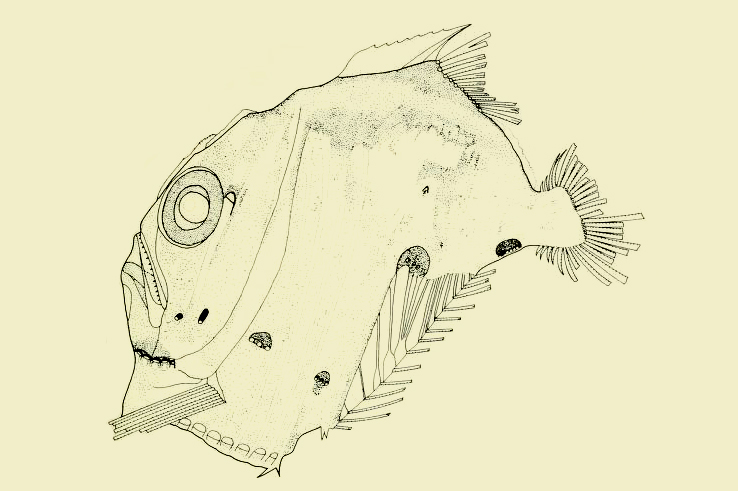
Dorsal fin 9-12; Anal fin 13-15; Pectoral fin 10-11; Gill rakers (total) 7-9; Vertebrae 27-30. Horizontal part of the ventral body margin behind the AN photophre group extended; anal fin , long posterior anal fin pterygiophores, and smaller AN and seDorsal fin short, triangular transparent membrane above anal fin. SAN (supra-anal photophore) high on body, its height greater than 1/2 distance from ventral body margin to body midline (often raised to midhne); gill raker tooth plates with prominent spines; secondary anal pterygiophores long, extending posteriorly on same level as anal photophores. |
|
Feeding |
Juveniles feed mostly on copepods, polychaetes and euphausiids, while adults feed mainly on amphipods and smaller fishes. |
|
Remarks |
In deep open ocean waters, pelagic fishes have no where to hide from their predators or prey. Marine Hatchetfish hide their silhouettes with a type of camouflage called bioluminescent counter illumination. Along with their very compressed bodies and silvery reflective sides, they have rows of light organs (photophores) mostly along the lower part of the body. These photophores produce a light that matches the colour and intensity of the down-welling light coming from our sun and other stars. |
|
Etymology |
The specific name is from the Greek pseúdēs (= false, fake, resembling) and the Latin obscura (= dark), in reference "to this species' close resemblance to S. ohscura". |
|
Species Citation |
Sternoptyx pseudobscura Baird 1971, Bulletin of the Museum of Comparative Zoology 142(1): 72, Fig. 54. Type locality: Western Atlantic, 1°20'S, 27°37'W to 1°26'S, 27°33'W. |
|
Author |
Bray, D.J. 2025 |
|
Resources |
Highlight Hatchetfish, Sternoptyx pseudobscura Baird 1971
References
Badcock, J. & Baird, R.C. 1980. Remarks on the systematics, development, and distribution of the hatchetfish genus Sternoptyx (Pisces, Stomiatoidei). Fishery Bulletin 77(4): 803-820.
Baird, R.C. 1971. The Systematics, Distribution, and Zoogeography of the Marine Hatchetfishes (Family Sternoptychidae). Bulletin of the Museum of Comparative Zoology at Harvard College 142: 1-128. https://www.biodiversitylibrary.org/part/20214
Harold, A.S. 1999. Families Gonostomatidae, Sternoptychidae, Phosichthyidae, Astronesthidae, Stomiidae, Chauliodontidae, Melanostomiidae, Idiacanthidae, Malacosteidae. pp. 1896-1917 in Carpenter, K.E. & Niem, V.H. (eds). The Living Marine Resources of the Western Central Pacific. FAO Species Identification Guide for Fisheries Purposes. Rome : FAO Vol. 3 pp. 1397-2068.
Harold, A. 2015. Sternoptyx pseudobscura. The IUCN Red List of Threatened Species 2015: e.T190145A21913870. https://dx.doi.org/10.2305/IUCN.UK.2015-4.RLTS.T190145A21913870.en. Accessed on 10 September 2025.
Hopkins, T.L. & Baird, R.C. 1985. Feeding ecology of four hatchetfishes (Sternoptychidae) in the eastern Gulf of Mexico. Bulletin of Marine Science 36(2): 260-277. See ref online