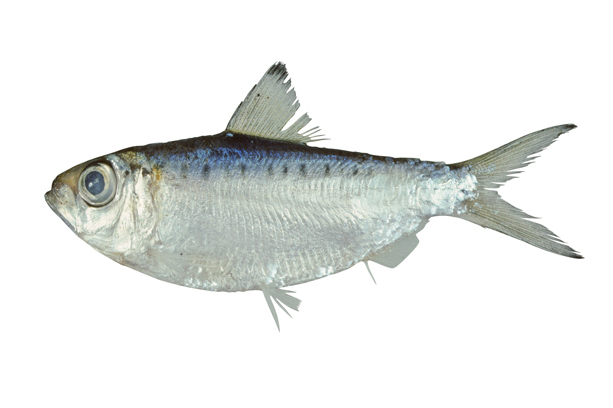
- Classification
- ACTINOPTERYGII
- CLUPEIFORMES
- CLUPEIDAE
- Herklotsichthys
- koningsbergeri
Largespotted Herring, Herklotsichthys koningsbergeri (Weber & de Beaufort 1912)
Other Names: Koningsberger's Herring, Large-spotted Herring, Mcculloch's Herring, Spotted Herring
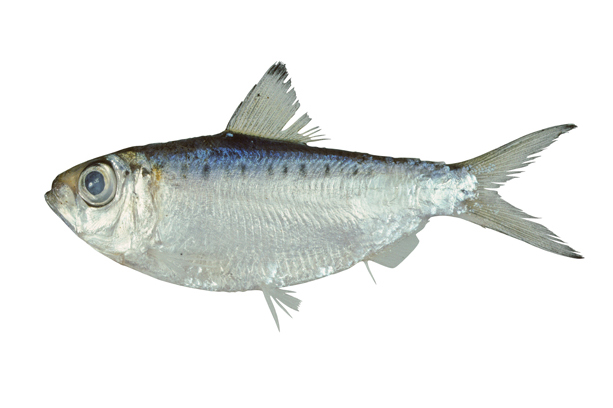
Largespotted Herring, Herklotsichthys koningsbergeri. Source: Australian National Fish Collection, CSIRO. License: CC by Attribution-NonCommercial
Cite this page as:
Bray, D.J. 2025, Herklotsichthys koningsbergeri in Fishes of Australia, accessed 14 Sep 2026, https://fishesofaustralia.net.au/home/species/2055
Largespotted Herring, Herklotsichthys koningsbergeri (Weber & de Beaufort 1912)
More Info
|
Distribution |
Shark Bay, Western Australia, around the tropical north to Coffs Harbour, New South Wales. Pelagic in coastal marine and estuarine waters. |
|
Features |
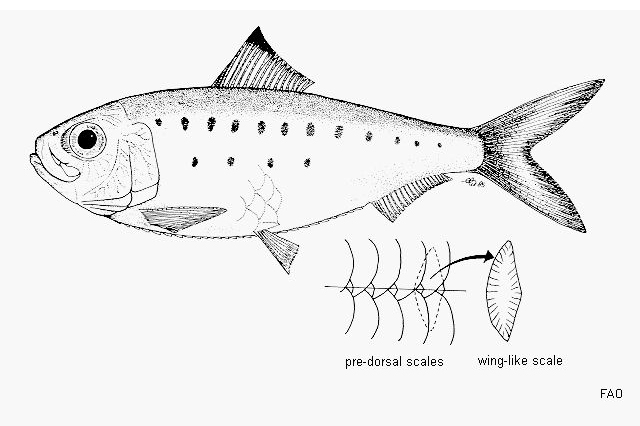
Dorsal fin 13-21; Anal fin 12-23. Elongate wing-like scales present beneath the normal paired pre-dorsal scales. |
|
Fisheries |
A small part of the bycatch in the Western Australian prawn trawl fisheries. |
|
Similar Species |
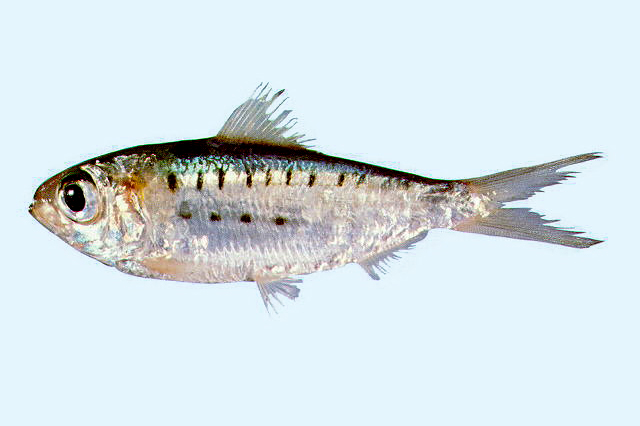
Differs from all other Australian species of Herklotsichthys in having a series of large and almost oval black spots along the side, and sometimes a second partial row below. |
|
Etymology |
The species is named in honour of Dutch biologist, Jacob Koningsberger, who sent holotype to Weber & de Beaufort. |
|
Species Citation |
Clupea (Harengula) koningsbergeri Weber & de Beaufort 1912, Bulletin of the British Museum (Natural History) Zoology (Supplement) 17(3): 14. Type locality: Aru Island (Arafura Sea, Irian Jaya). |
|
Author |
Bray, D.J. 2025 |
|
Resources |
Largespotted Herring, Herklotsichthys koningsbergeri (Weber & de Beaufort 1912)
References
Allen, G.R. 1997. Marine Fishes of Tropical Australia and South-east Asia. Perth : Western Australian Museum 292 pp. 106 pls.
Gaughan, D., Munroe, T.A. & Mohd Arshaad, W. 2017. Herklotsichthys koningsbergeri. The IUCN Red List of Threatened Species 2017: e.T98472694A98846810. https://dx.doi.org/10.2305/IUCN.UK.2017-3.RLTS.T98472694A98846810.en. Accessed on 06 October 2025.
Grant, E.M. 1975. Guide to Fishes. Brisbane : Queensland Government, Co-ordinator General’s Department 640 pp.
Munroe, T.A., Wongratana, T. & Nizinski, M.S. 1999. Family Clupeidae. pp. 1775-1821 in Carpenter, K.E. & Niem, V.H. (eds). The Living Marine Resources of the Western Central Pacific. FAO Species Identification Guide for Fisheries Purposes. Rome : FAO Vol. 3 pp. 1397-2068.
Sainsbury, K.J., Kailola, P.J. & Leyland, G.G. 1984. Continental Shelf Fishes of Northern and North-Western Australia. Canberra : Fisheries Information Service 375 pp. figs & pls.
Weber, M. & de Beaufort, L.F. 1912. Contributions to the knowledge of Indo-Australian fishes. Bulletin of the British Museum (Natural History) Zoology (Supplement) 17(3): 1-21 fig. 1 See ref online
Whitehead, P.J.P. 1985. FAO species catalog. Clupeoid fishes of the world (suborder Clupeoidei). Part 1 — Chirocentridae, Clupeidae and Pristigasteridae. FAO Fisheries Synopsis No. 125 Vol. 7 Pt 1. pp. 1-303
Whitley, G.P. 1931. Studies in Ichthyology No. 5. Records of the Australian Museum 18(4): 138-160 figs 1-2 pls 20-21 (described as Harengula maccullochi, type locality Port Hedland, Western Australia)