Longfin Waspfish, Apistus carinatus (Bloch & Schneider 1801)
Other Names: Longfinned Waspfish, Long-finned Waspfish, Ocellated Waspfish
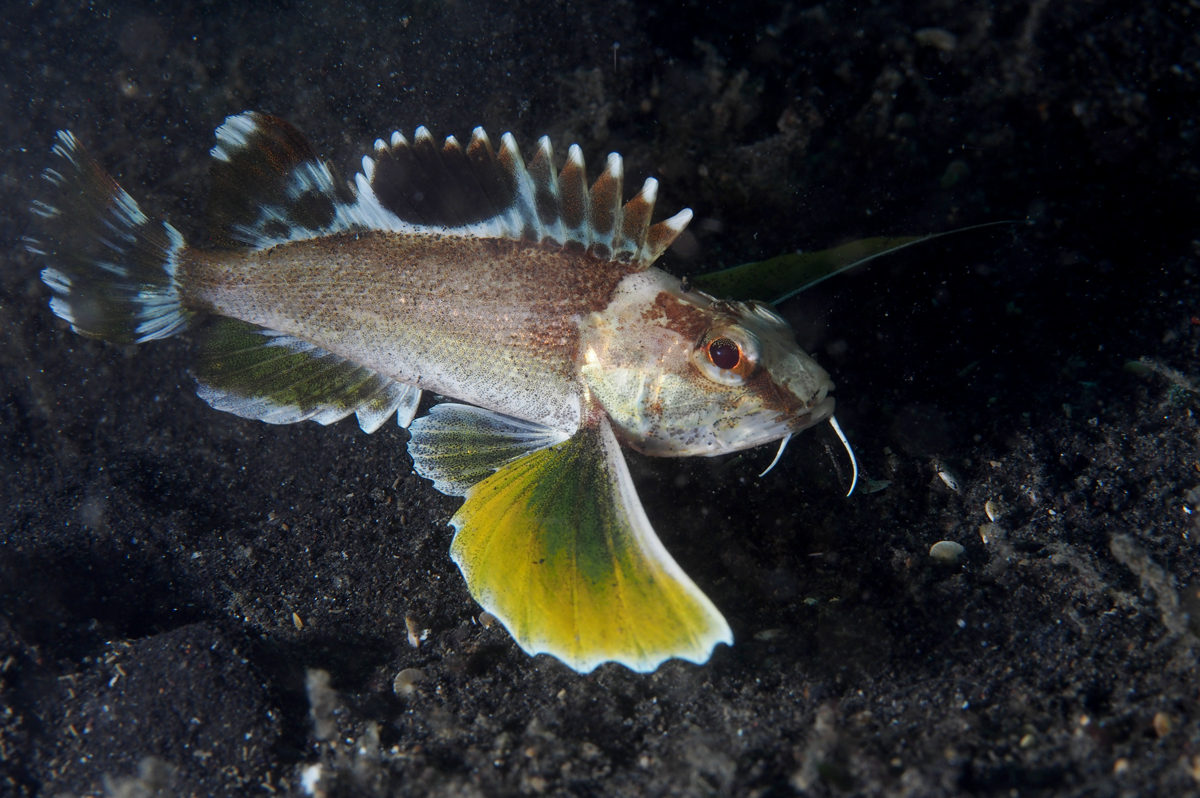
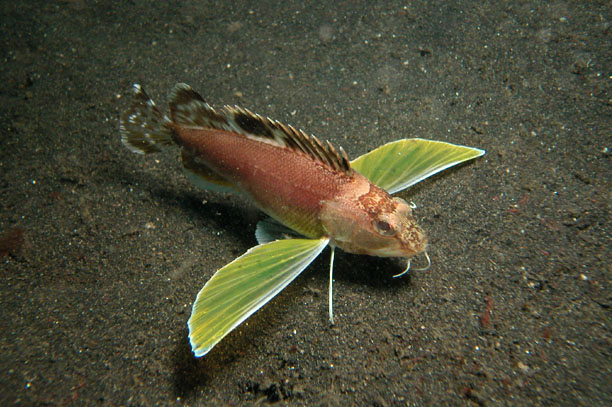
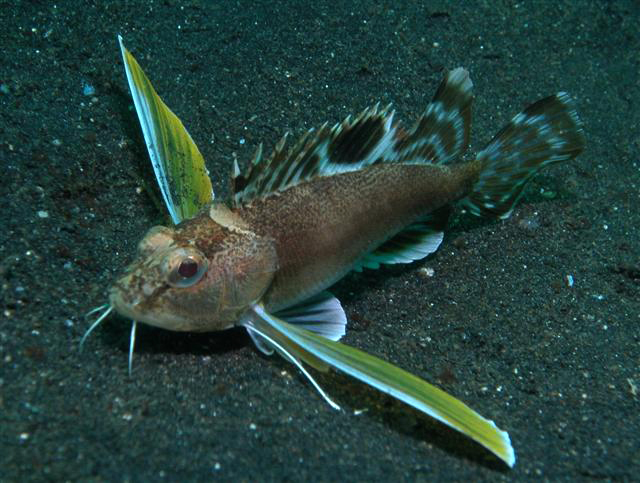
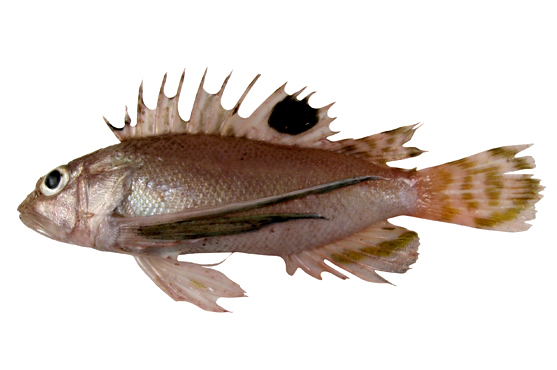
A Longfin Waspfish, Apistus carinatus, at Anilao, Philipppines. Source: Rickard Zerpe / Flickr. License: CC by Attribution-ShareAlike
Summary:
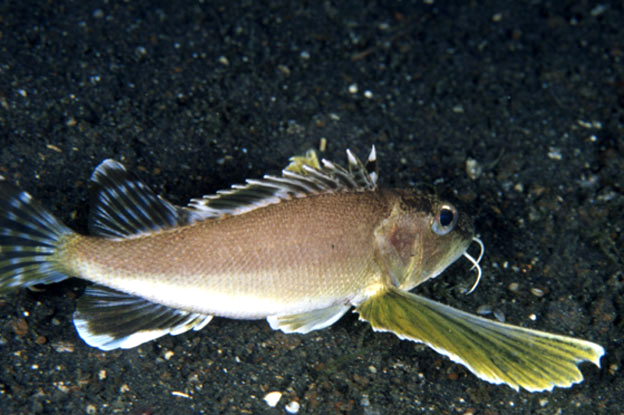
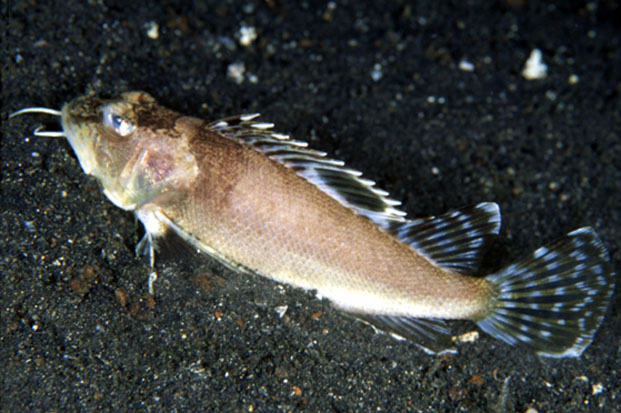
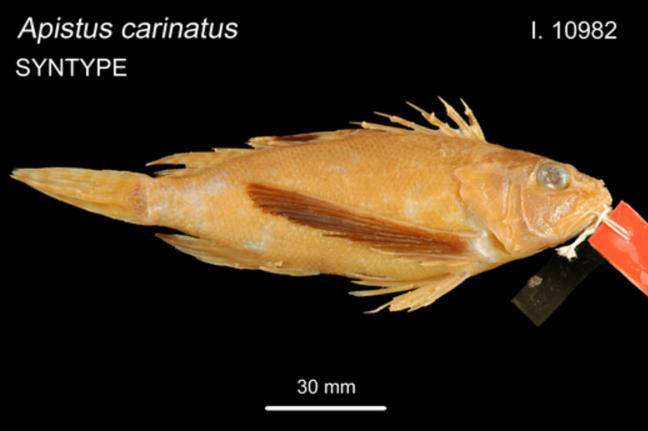
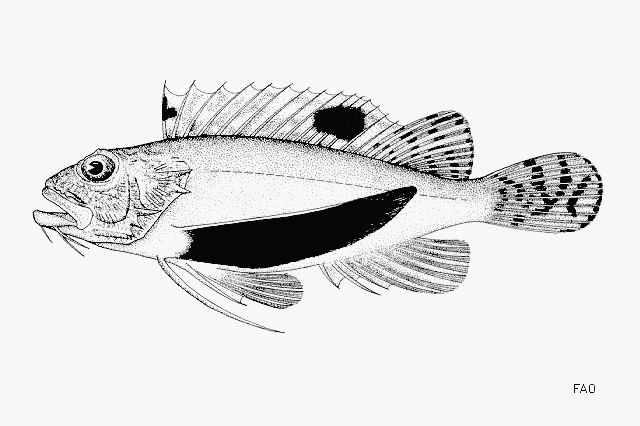
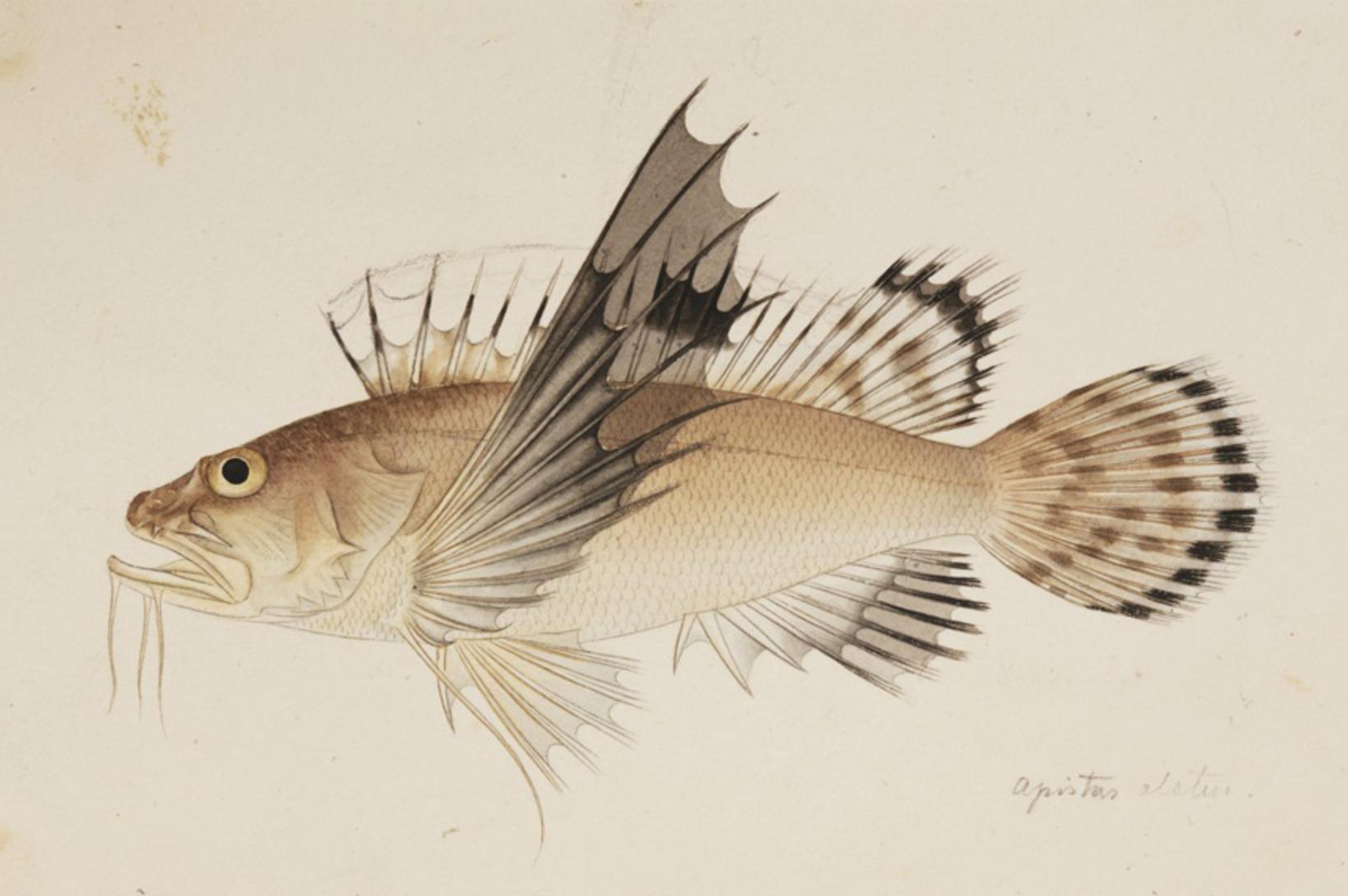
A bluish to pinkish-grey waspfish with a large black ocellated spot on the rear half of the spinous dorsal fin, long yellow pectoral fins, and sensory barbels on the chin.
Video of a Longfin Waspfish
Video of a Longfin Waspfish
Cite this page as:
Bray, D.J. 2025, Apistus carinatus in Fishes of Australia, accessed 27 Oct 2026, https://fishesofaustralia.net.au/home/species/3152
Longfin Waspfish, Apistus carinatus (Bloch & Schneider 1801)
More Info
|
Distribution |
Carnarvon, Western Australia, around the tropical north to off Newcastle, New South Wales. Elsewhere the species occurs in the tropical Indo-west Pacific: Red Sea and Persian Gulf, and East Africa, to Australia and the East Indian region, including Malaysia, Indonesia, and the Philippines, northward to Taiwan, Chin, and Japan. Inhabits sandy, silty bottoms, usually buried deep in the sediment during the day with only the eyes exposed. |
|
Feeding |
The sensory barbels are used to detect buried prey, and the Longfin Waspfish can corner prey by spreading the large pectoral fins. |
|
Fisheries |
Taken in small numbers as prawn trawl bycatch in Australia. |
|
Remarks |
When disturbed, the Long-finned Waspfish spreads out its long pectoral fins, displaying the bright yellow upper colour to deter predators. |
|
Etymology |
The specific name is from the Latin carinatus (= keeled), presumably in reference to the keels or bony ridges on the head of this species. |
|
Species Citation |
Scorpaena carinata Bloch & Schneider 1801. Systema Ichthyologiae: 193. Type locality: Tranquebar, India. |
|
Author |
Bray, D.J. 2025 |
|
Resources |
Longfin Waspfish, Apistus carinatus (Bloch & Schneider 1801)
References
Allen, G.R. 1997. Marine Fishes of Tropical Australia and South-east Asia. Perth : Western Australian Museum 292 pp. 106 pls. (as Hypodytes carinatus)
Allen, G.R. & Erdmann, M.V. 2012. Reef fishes of the East Indies. Perth : Tropical Reef Research 3 vols, 1260 pp.
Allen, G.R. & Swainston, R. 1988. The Marine Fishes of North-Western Australia. A field guide for anglers and divers. Perth, WA : Western Australian Museum vi 201 pp., 70 pls.
Bloch, M.E. & Schneider, J.G. 1801. Systema Ichthyologiae Iconibus ex Illustratum. Berlin 584 pp. 110 pls. https://doi.org/10.5962/bhl.title.5750
Dor, M. 1984. CLOFRES, Checklist of the Fishes of the Red Sea. Jerusalem : Israel Academy of Sciences and Humanities 437 pp. 2 figs.
Eschmeyer, W.N. 1986. Family No. 149: Scorpaenidae. pp. 463-478 in Smith, M.M. & Heemstra, P.C. (eds). Smith's Sea Fishes. Johannesburg : Macmillan South Africa xx + 1047 pp. 144 pls.
Johnson, J.W. 2010. Fishes of the Moreton Bay Marine Park and adjacent continental shelf waters, Queensland, Australia. pp. 299-353 in Davie, P.J.F. & Phillips, J.A. Proceedings of the Thirteenth International Marine Biological Workshop, The Marine Fauna and Flora of Moreton Bay. Memoirs of the Queensland Museum 54(3)
Kuiter, R.H. 1996. Guide to Sea Fishes of Australia. A comprehensive reference for divers and fishermen. Sydney, NSW, Australia : New Holland Publishers xvii, 434 pp.
Larson, H.K., Williams, R.S. & Hammer, M.P. 2013. An annotated checklist of the fishes of the Northern Territory, Australia. Zootaxa 3696(1): 1-293
Mandrytsa, S.A. 2001. Lateral Line System and Classification of Scorpaenoid Fishes (Scorpeaniformes: Scorpaenidei). Perm : Perm State Univ. Press pp. 1-393.
Matsunuma, M., Seah, Y.G. & Motomura, H. 2024. Review of Apistus (Synanceiidae: Apistinae) with description of a new species from the Arabian Sea and taxonomic status of Apistus balnearum Ogilby 1910, a junior synonym of Apistops caloundra (De Vis 1886). Ichthyological Research 72: 320–349. https://doi.org/10.1007/s10228-024-00998-6
Motomura, H., Khan, M. & Matsuura, K. 2018. Apistus carinatus. The IUCN Red List of Threatened Species 2018: e.T46096953A46665114. https://dx.doi.org/10.2305/IUCN.UK.2018-2.RLTS.T46096953A46665114.en. Accessed on 06 November 2025.
Ogilby, J.D. 1910. On some new fishes from the Queensland coast. Endeavour Series No. 1 23: 85-13 (described as Apistus macrolepidotus)
Poss, S.G. 1999. Families Scorpaenidae, Caracanthidae, Aploactinidae. pp. 2291-2358 in Carpenter, K.E. & Niem, T.H. (eds). The Living Marine Resources of the Western Central Pacific. FAO Species Identification Guide for Fisheries Purposes. Rome : FAO Vol. 4 pp. 2069-2790.
Sainsbury, K.J., Kailola, P.J. & Leyland, G.G. 1984. Continental Shelf Fishes of Northern and North-Western Australia. Canberra : Fisheries Information Service 375 pp. figs & pls.