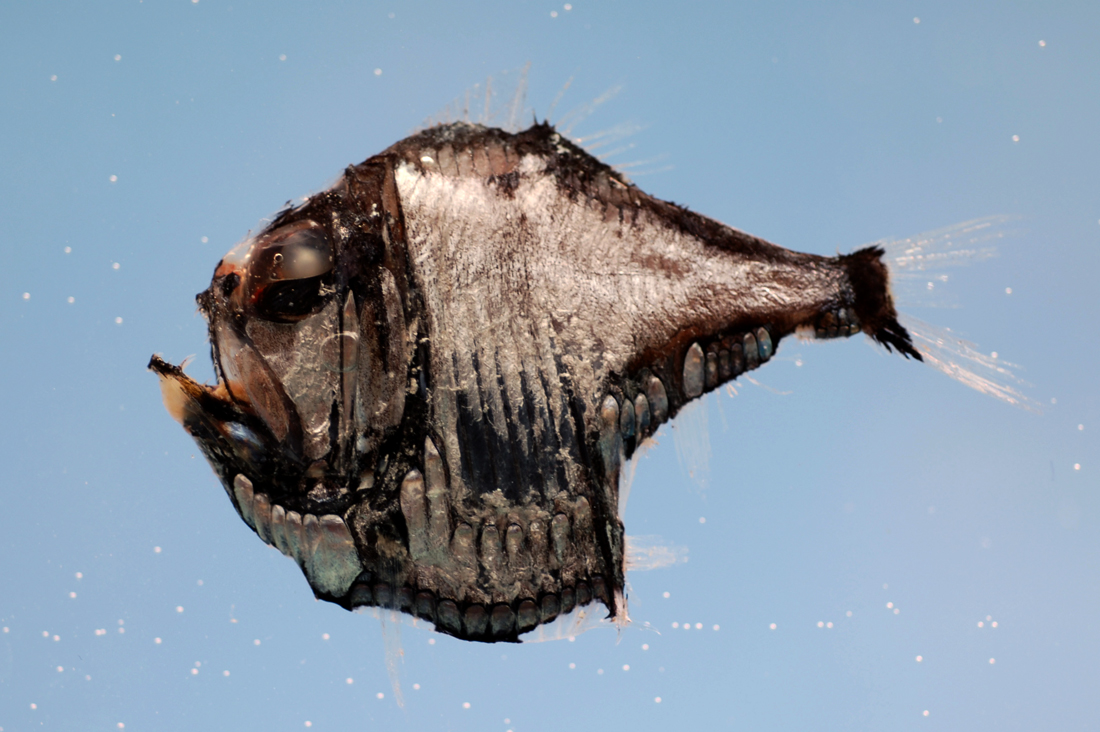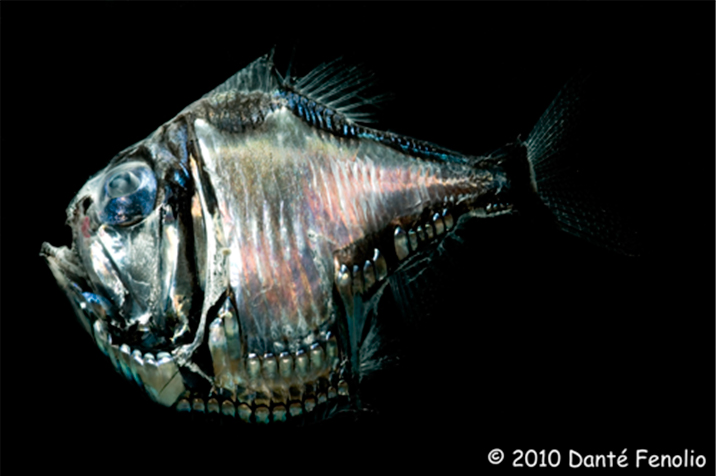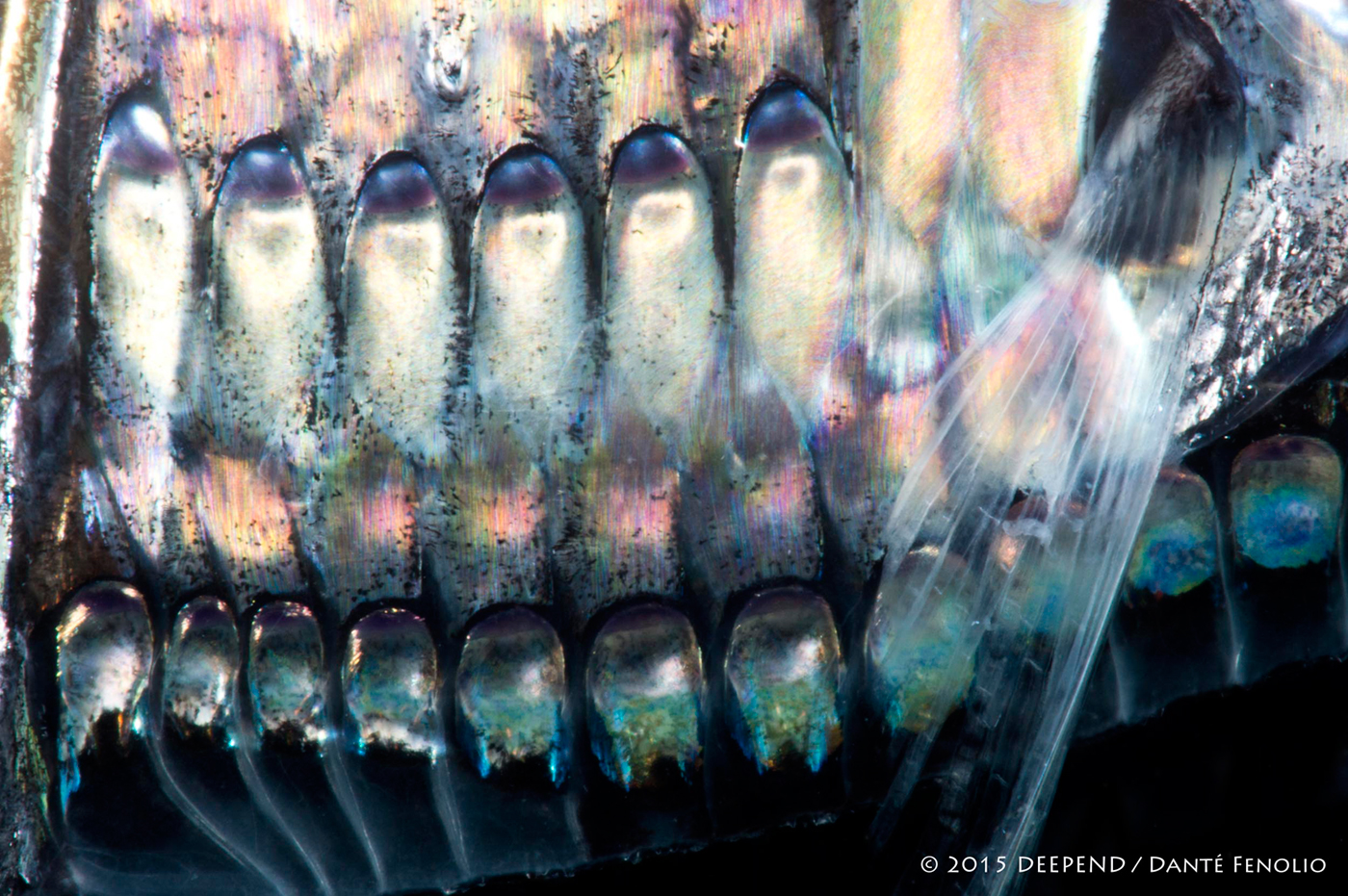
Lovely Hatchetfish, Argyropelecus aculeatus Valenciennes 1849
Other Names: Hatchet Fish, Lovely Hatchet-fish, Silver Hatchetfish
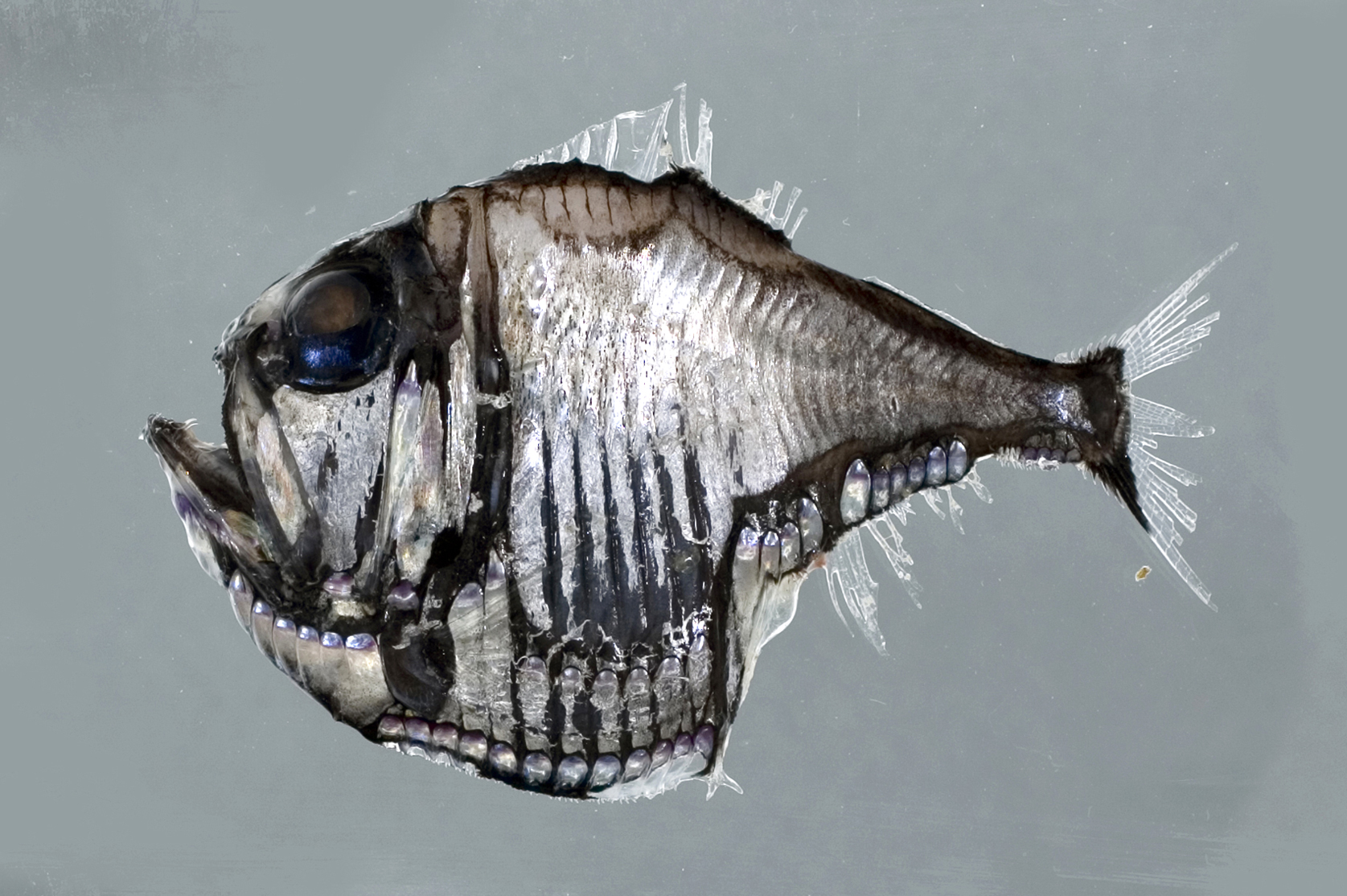
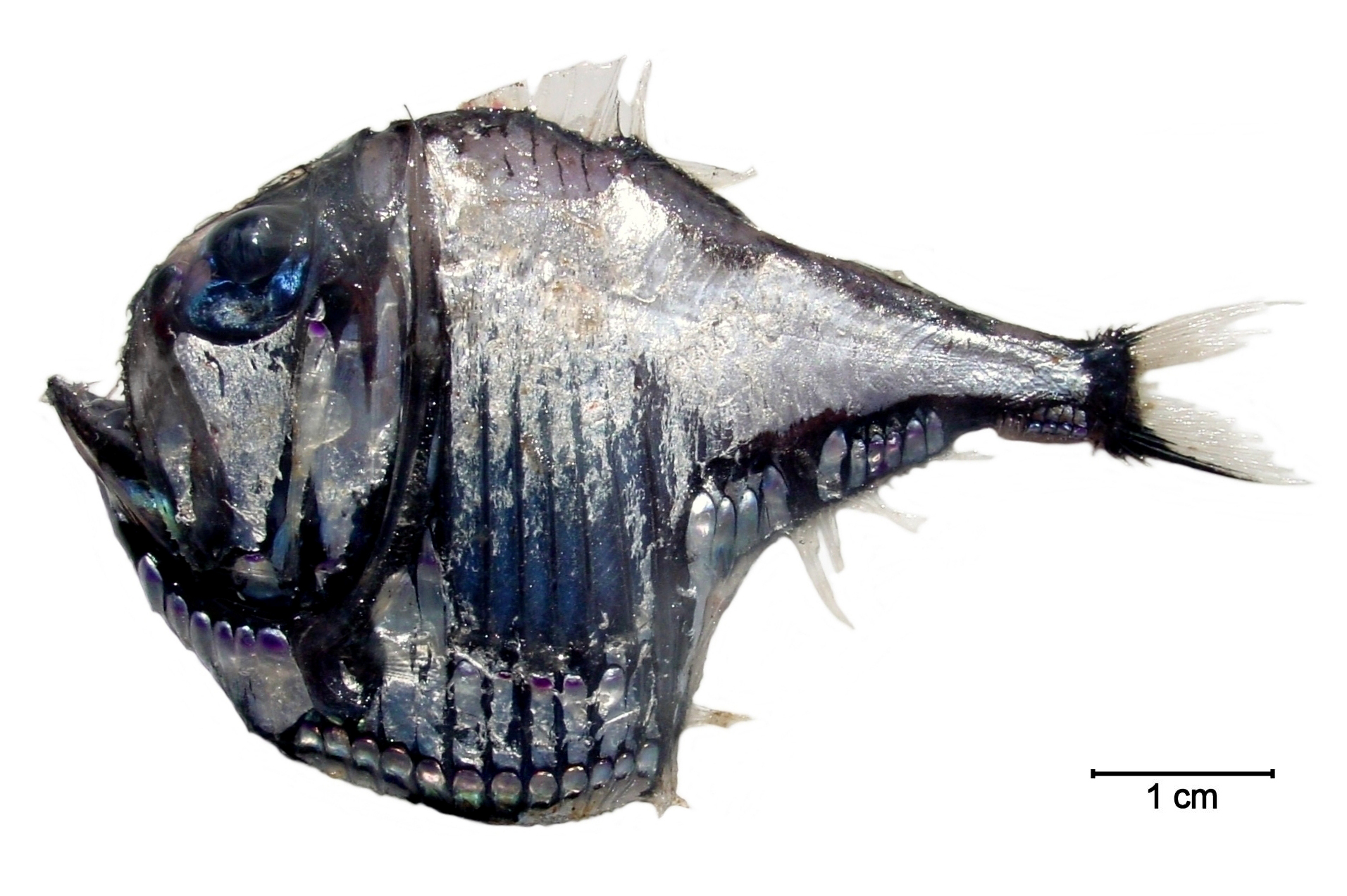
A Lovely Hatchetfish, Argyropelecus aculeatus, from the Norfolk Ridge in the Tasman Sea, May 2003. Source: NORFANZ Founding Parties. License: All rights reserved
Summary:
A relatively large hatchetfish, found mostly at 200-600 m during the day, migrating to feed mostly in depths of 80-200 m at night.
The silver sides and bioluminescence camouflages the Lovely Hatchetfish, enabling it to hide from predators and prey in the down-welling light of the twilight zone.
The silver sides and bioluminescence camouflages the Lovely Hatchetfish, enabling it to hide from predators and prey in the down-welling light of the twilight zone.
Cite this page as:
Bray, D.J. 2025, Argyropelecus aculeatus in Fishes of Australia, accessed 28 Sep 2026, https://fishesofaustralia.net.au/home/species/3938
Lovely Hatchetfish, Argyropelecus aculeatus Valenciennes 1849
More Info
|
Distribution |
From off Cape York, Queensland, around southern Australia, to west of Cape Cuvier, Western Australia; also the Lord Howe Province in the Tasman Sea. Elsewhere the species is circumglobal in tropical and temperate waters (except the eastern North Pacific). |
|
Features |
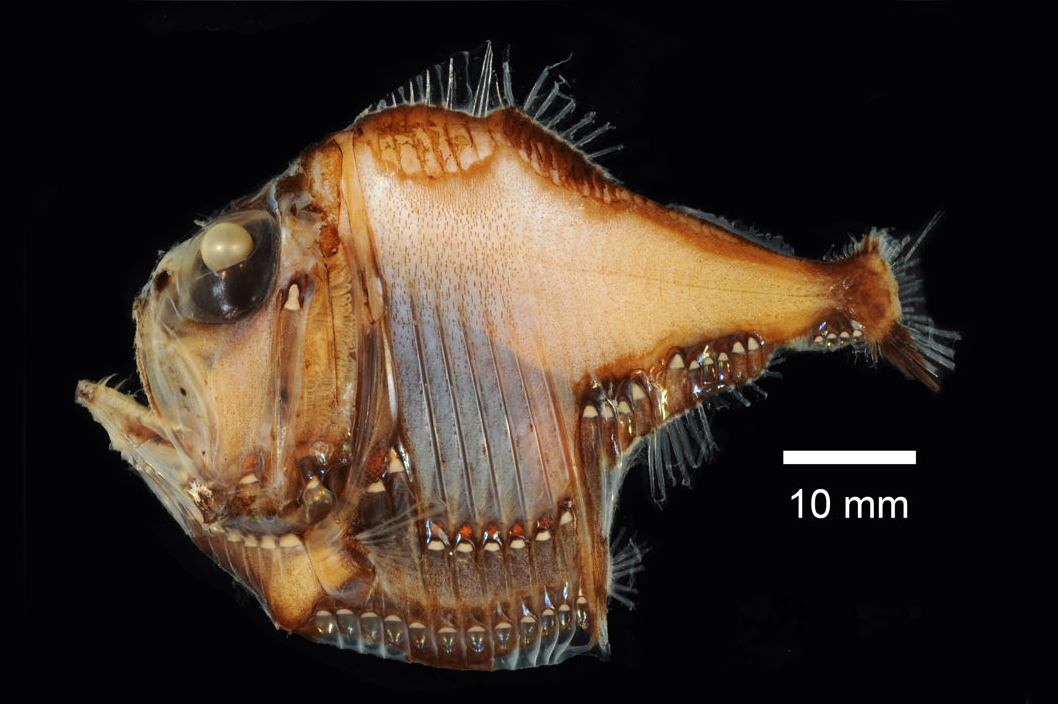
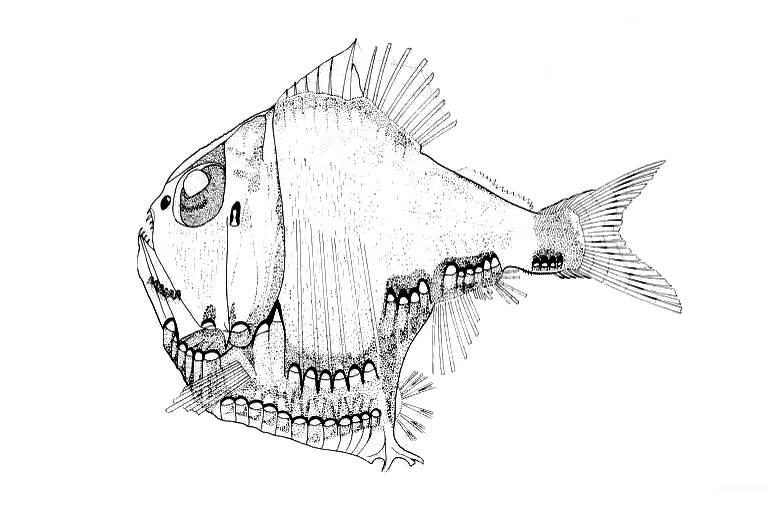
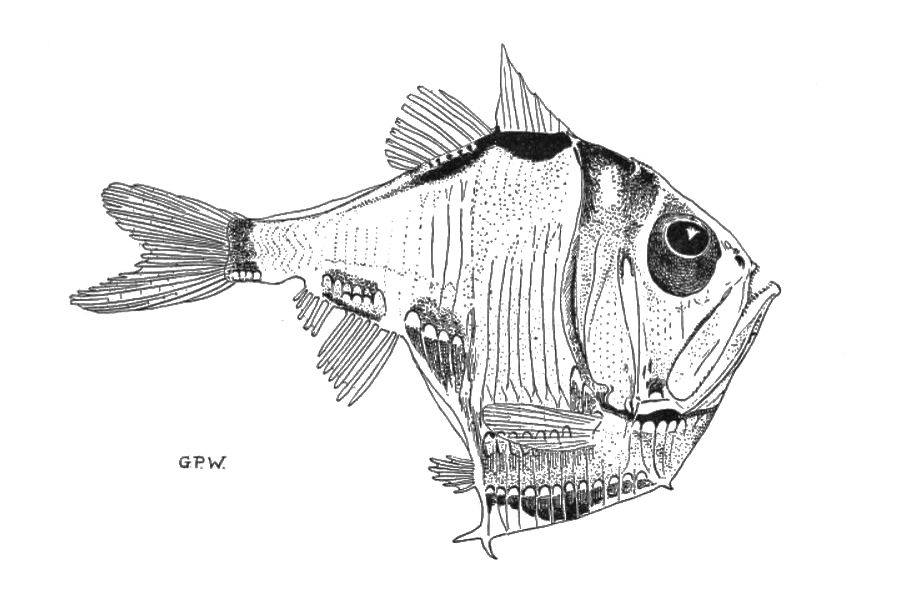
Dorsal fin 9; Anal fin 12; Pectoral fin 10–11; Total gill rakers 15–17; Vertebrae 34–36. A large species, often exceeding 70 mm SL; body very deep, depth at end of dorsal less than 1.4 into SL: dorsal spine quite high, its height about equal to its length; post-temporal spines present; dorsal surface of post-temporal with distinct serrations: postabdominal spines well developed, the posterior much larger than anterior; ventral keel extends well below body margin near postabdominal spines; preopercle spines short, both pointing ventrally; jaws large, teeth long, recurved, with two enlarged canines in lower jaw; spines present below and in front of subcaudal photophores; gill rakers medium to short, with dentate inner surfaces; pigment diffuse on trunk, no marked pigment on midline, pigment concentration above subcaudals present, pigmentless bar anterior to caudal peduncle in young. (Chris Kenaley http://deepseafishes.lifedesks.org/pages/430) |
|
Feeding |
Migrates vertically to feed mostly in the epipelagic zone early at night. Prey items include ostracods and copepods for smaller individuals, and pteropods, euphausiids and fishes for larger individuals. |
|
Etymology |
The specific name is from the Latin aculeatus (= prickly). |
|
Species Citation |
Argyropelecus aculeatus Valenciennes, 1849, Hist. Nat. Poiss. 22: 406. Type locality: Azores. |
|
Author |
Bray, D.J. 2025 |
|
Resources |
Lovely Hatchetfish, Argyropelecus aculeatus Valenciennes 1849
References
Baird, R.C. 1971. The systematics, distribution, and zoogeography of the marine hatchetfishes (family Sternoptychidae). Bulletin of The Museum of Comparative Zoology 142: 1–128.
Borodulina, O.D. 1978. Materials on the systematics and distribution of the oceanic hatchet-fishes genera Argyropelecus and Sternoptyx (Sternoptychidae, Osteichthyes). Trudy Instituta Okeanologii. Akademiya Nauk SSSR. Moskva 111: 28-60 figs 1-16 [in Russian]
Harold, A.S. 1999. Families Gonostomatidae, Sternoptychidae, Phosichthyidae, Astronesthidae, Stomiidae, Chauliodontidae, Melanostomiidae, Idiacanthidae, Malacosteidae. pp. 1896-1917 in Carpenter, K.E. & Niem, V.H. (eds). The Living Marine Resources of the Western Central Pacific. FAO Species Identification Guide for Fisheries Purposes. Rome : FAO Vol. 3 pp. 1397-2068.
Harold, A. 2015. Argyropelecus aculeatus. The IUCN Red List of Threatened Species 2015: e.T18253276A21913654. https://dx.doi.org/10.2305/IUCN.UK.2015-4.RLTS.T18253276A21913654.en. Accessed on 13 December 2025.
Harold, A.S. & Gomon, M.F. 2008. Family Sternoptychidae, in Gomon, M.F., Bray, D.J. & Kuiter, R.H. (eds). Fishes of Australia's Southern Coast. Sydney : Reed New Holland 928 pp.
Harold, A.S., Stewart, A.L. & Roberts, C.D. 2015. 67 Family Sternoptychidae, pp. 446-468, in Roberts, C.D., Stewart, A.L. & Struthers, C.D. The Fishes of New Zealand. Wellington : Te Papa Press Vol. 2 pp. 1-576.
Hopkins, T.L. & Baird, R.C. 1985. Feeding ecology of four hatchetfishes (Sternoptychidae) in the eastern Gulf of Mexico. Bulletin of Marine Science 36(2): 260–277.
Last, P.R., Pogonoski, J.J., Gledhill, D.C. White, W.T. & Walker, C.J. 2014. The deepwater demersal ichthyofauna of the western Coral Sea. Zootaxa 3887(2): 191–224
Ogilby, J.D. 1888. Description of a new genus and species of deep sea fish from Lord Howe Island. Proceedings of the Linnean Society of New South Wales 2 3(3): 1313 (described as Sternoptychides amabilis, type locality Lord Howe Island)
Valenciennes, A. in Cuvier, G.L. & Valenciennes, A. 1849. Histoire Naturelle des Poissons. Paris : Levrault Vol. 22 532 pp. pls 634-650.
Whitley, G.P. 1940. Illustrations of some Australian fishes. The Australian Zoologist 9(4): 397-428 figs 1-45 pls 30-31 (as Argyropelecus amabilis)