Dysommina pygmaea Tighe & Pogonoski 2025
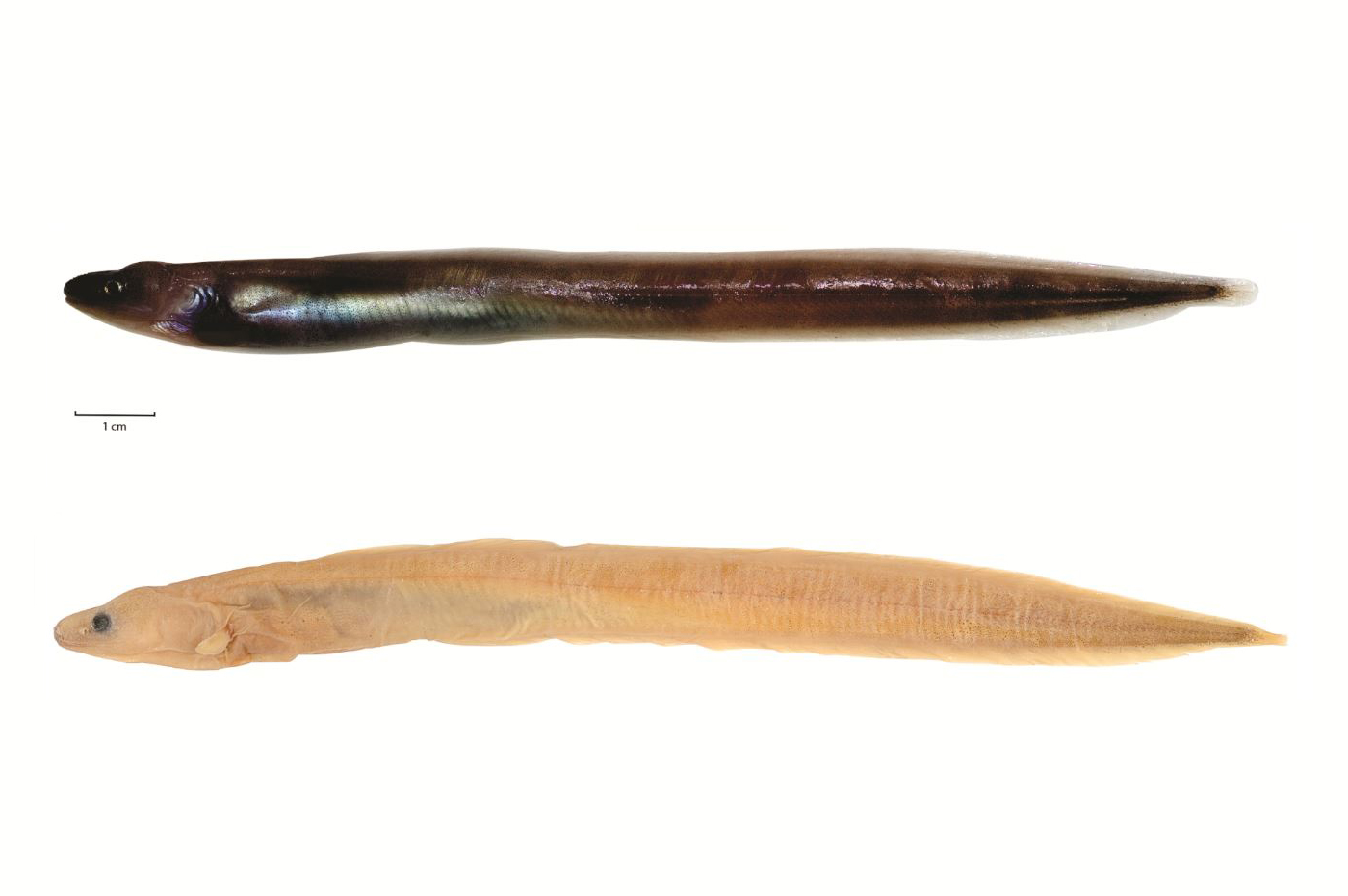
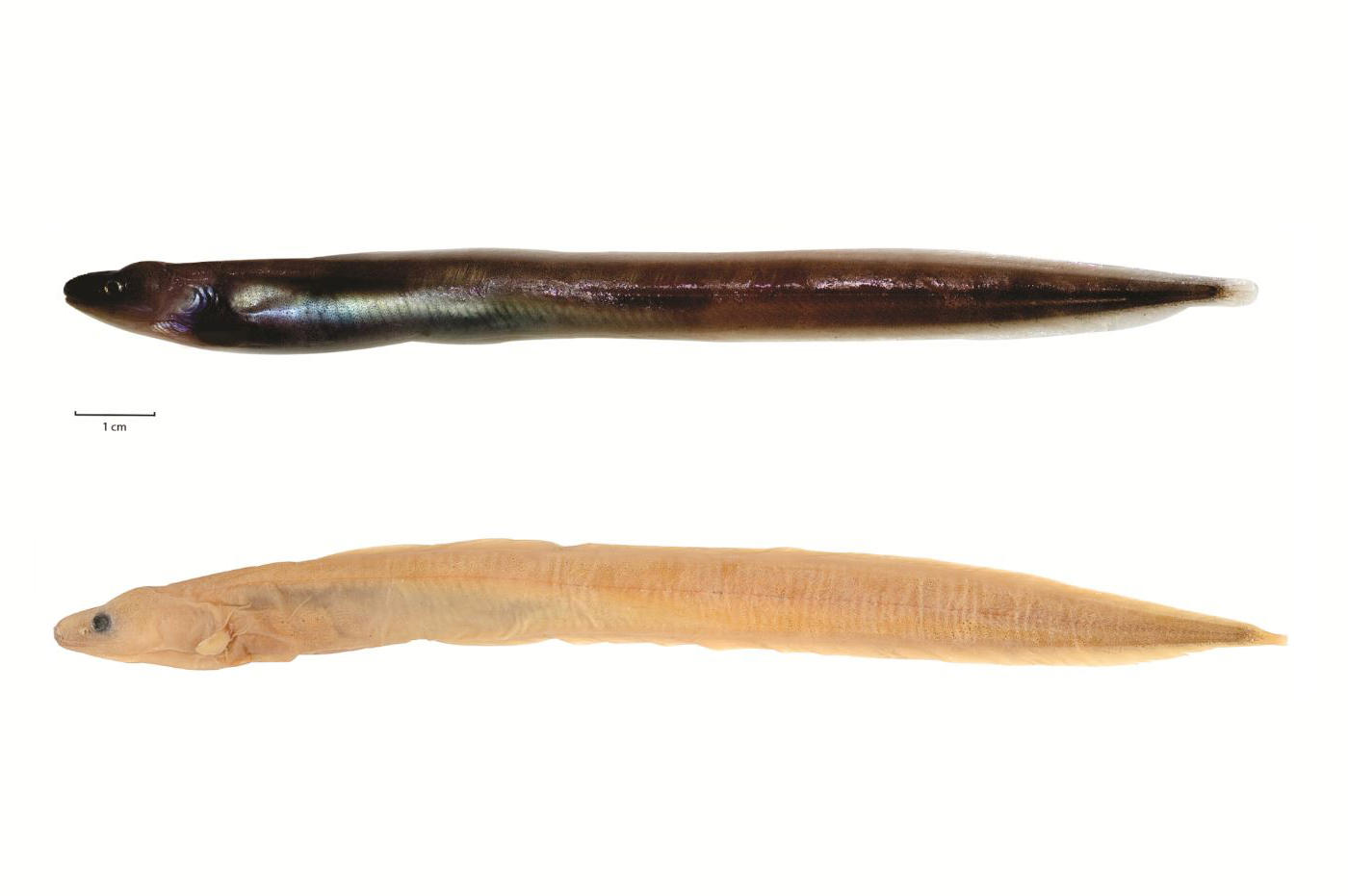
Holotype of Dysommina pygmaea (NMV A 29681-004, 145 mm TL) from near Rowley Shoals, Western Australia, June 2007 (fresh and preserved coloration). Source: Martin F. Gomon (Museums Victoria) and Carlie Devine (CSIRO). License: CC by Attribution-NonCommercial
Summary:
A species of Dysommina with the following combination of characters: predorsal vertebrae 16, preanal vertebrae 27–28, total vertebrae 122, eye diameter about 12–14% head length, vomerine dentition four large compound teeth set in papillose pads, maxillary and mandibular teeth numerous but small
Cite this page as:
Bray, D.J. 2025, Dysommina pygmaea in Fishes of Australia, accessed 10 Sep 2026, https://fishesofaustralia.net.au/home/species/5787
Dysommina pygmaea Tighe & Pogonoski 2025
More Info
|
Distribution |
Collected at a single trawl station near Rowley Shoals off Western Australia. The species was collected in a beam trawl on a rocky bottom with a catch that included hard bottomed animals such as glass sponges and stalked crinoids. |
|
Features |
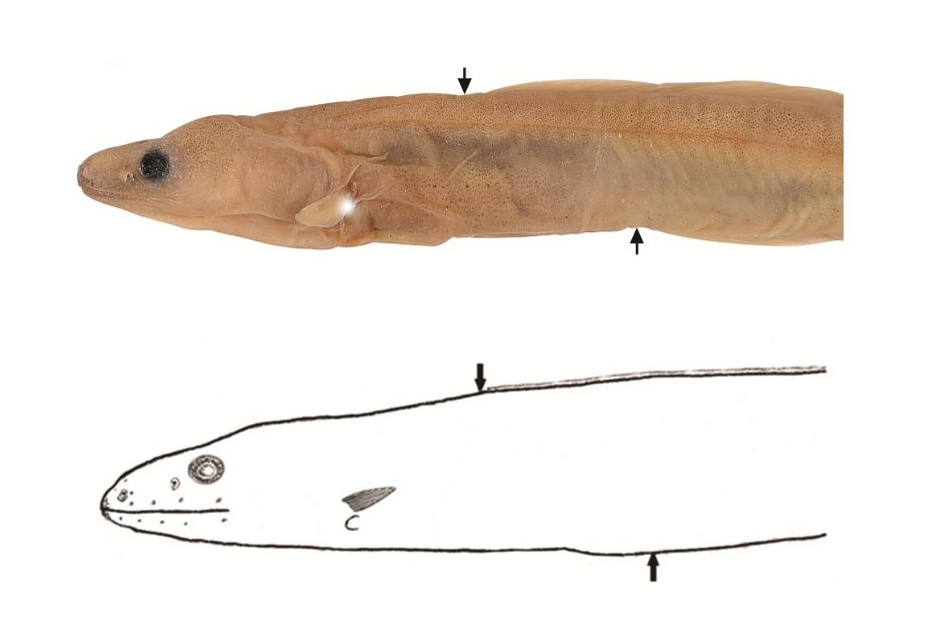
Predorsal vertebrae 16, preanal vertebrae 27–28, total vertebrae 122, eye diameter about 12–14% head length, vomerine dentition four large compound teeth set in papillose pads, maxillary and mandibular teeth numerous but small. Body moderately elongate, slightly compressed in head and trunk. Pectoral fin present; dorsal-fin origin behind tip of pectoral fin; anal-fin origin approximately one head length behind pectoral-fin base. Snout projects very slightly beyond tip of lower jaw. Snout plicate (folded), with four main plicae (folds) on each side of midline; median first plica L-shaped, extending laterally in front of second plica; second plica curves slightly laterally behind dorsal end of third plica, third and fourth plica smaller and less distinct than others; first supraorbital pore just above dorsal end of second and third plicae. Tip of lower jaw also plicate, with total of 12 plicae although only 8 extend outside of lip onto tip of jaw; two median plicae largest; three lateral plicae on each side of median plicae, reducing slightly in size from interior to exterior; first preopercular-mandibular pore just behind posterior end of third and fourth plicae. Anterior portion of snout and lower jaw extensively covered with papillae; papillae reduced in number posteriorly along head. |
|
Etymology |
The specific name is from the Latin pygmaeus (= dwarf), in reference to the small adult size of this species. |
|
Species Citation |
Dysommina pygmaea Tighe & Pogonoski 2025, Zootaxa 5683(2): 266, Figs 1-13. Type locality: Australia: Western Australia, Rowley Shoals, Mermaid L34 east transect, 17°02'50"S, 119°39'41"E to 17°03'42"S, 119°41'22"E, depth 424-456 m. |
|
Author |
Bray, D.J. 2025 |
|
Resources |
Dysommina pygmaea Tighe & Pogonoski 2025
References
Morphosource - CT/microCT scan: Media 000768042: Dysommina pygmaea. NMV: Ichthyology: A29681-004 Head https://www.morphosource.org/concern/media/000768042
Tighe, K.T. & Pogonoski. J.J, 2025. A new species of the genus Dysommina (Teleostei: Anguilliformes: Synaphobranchidae: Ilyophinae) from the eastern Indian Ocean. Zootaxa 5683(2): 265-281. https://doi.org/10.11646/zootaxa.5683.2.6