Eastern Australian Salmon, Arripis trutta (Forster 1801)
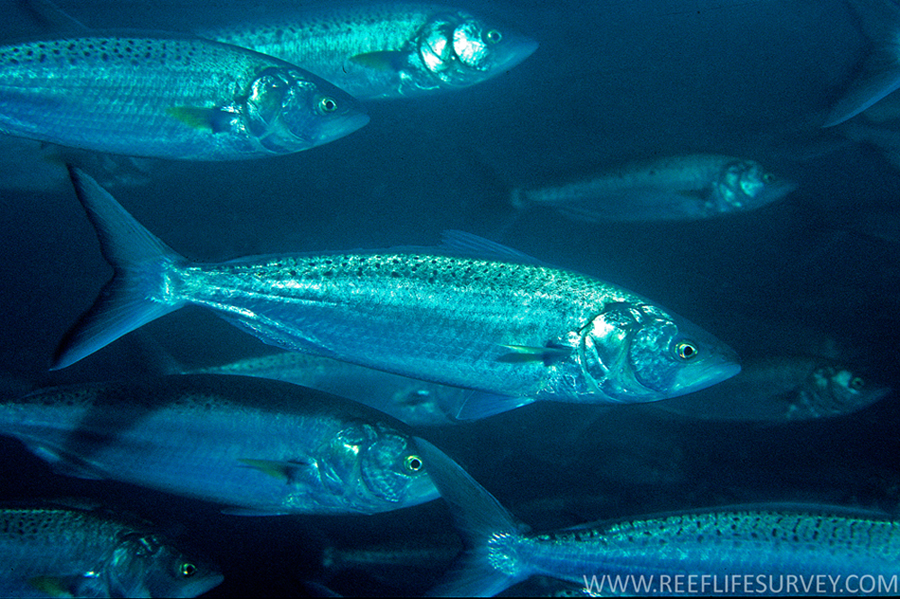
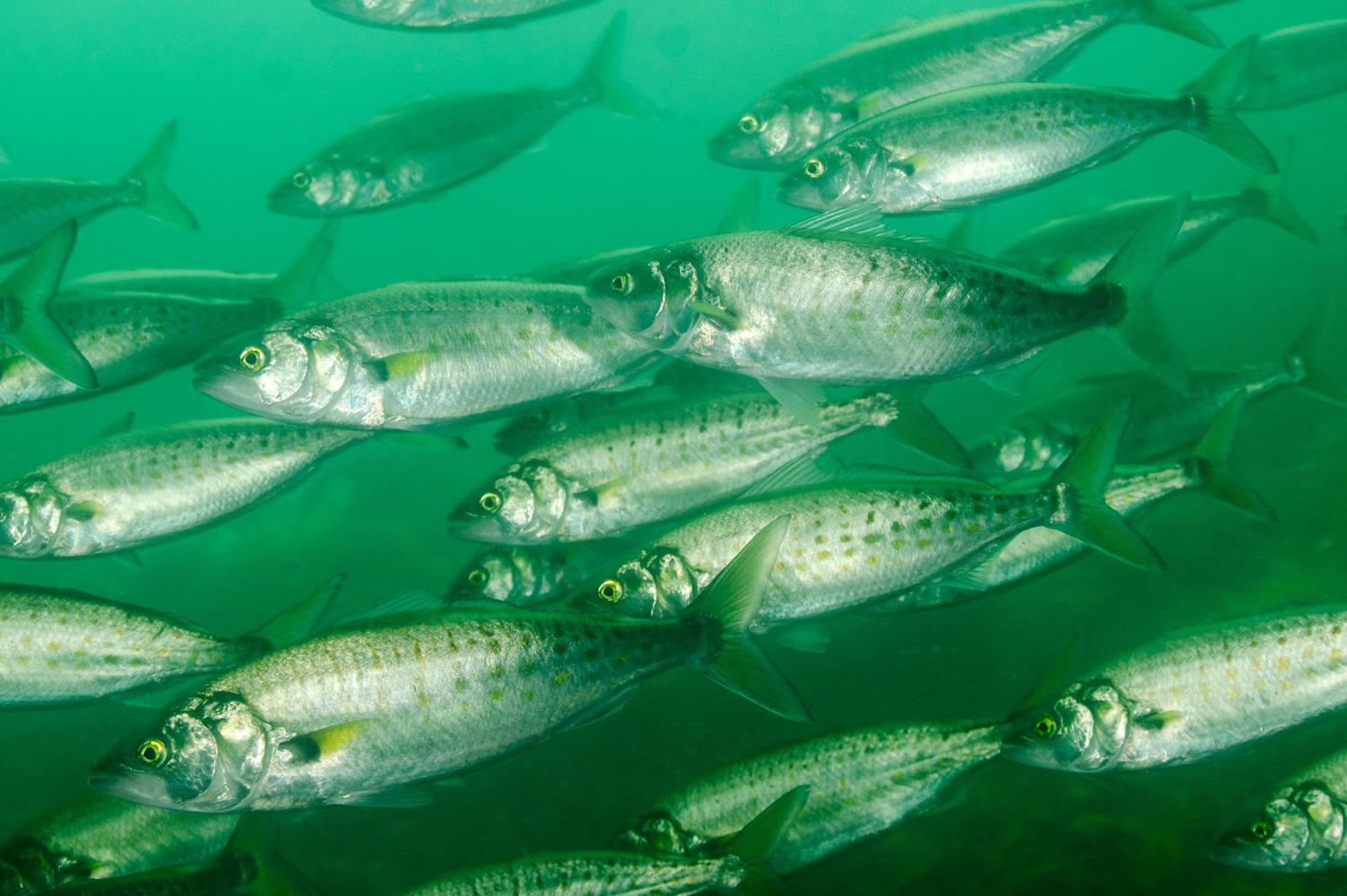
A school of Eastern Australian Salmon, Arripis trutta, at Jimmies Island, Batemans Bay, New South Wales. Source: Andrew J. Green / Reef Life Survey. License: CC by Attribution
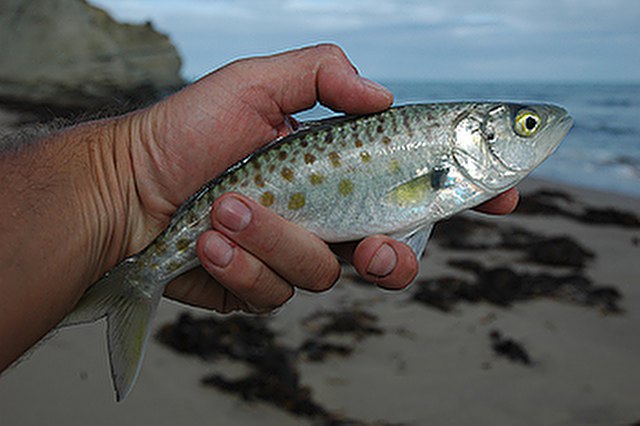
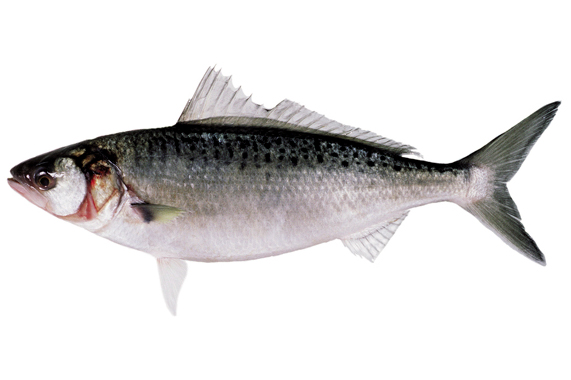
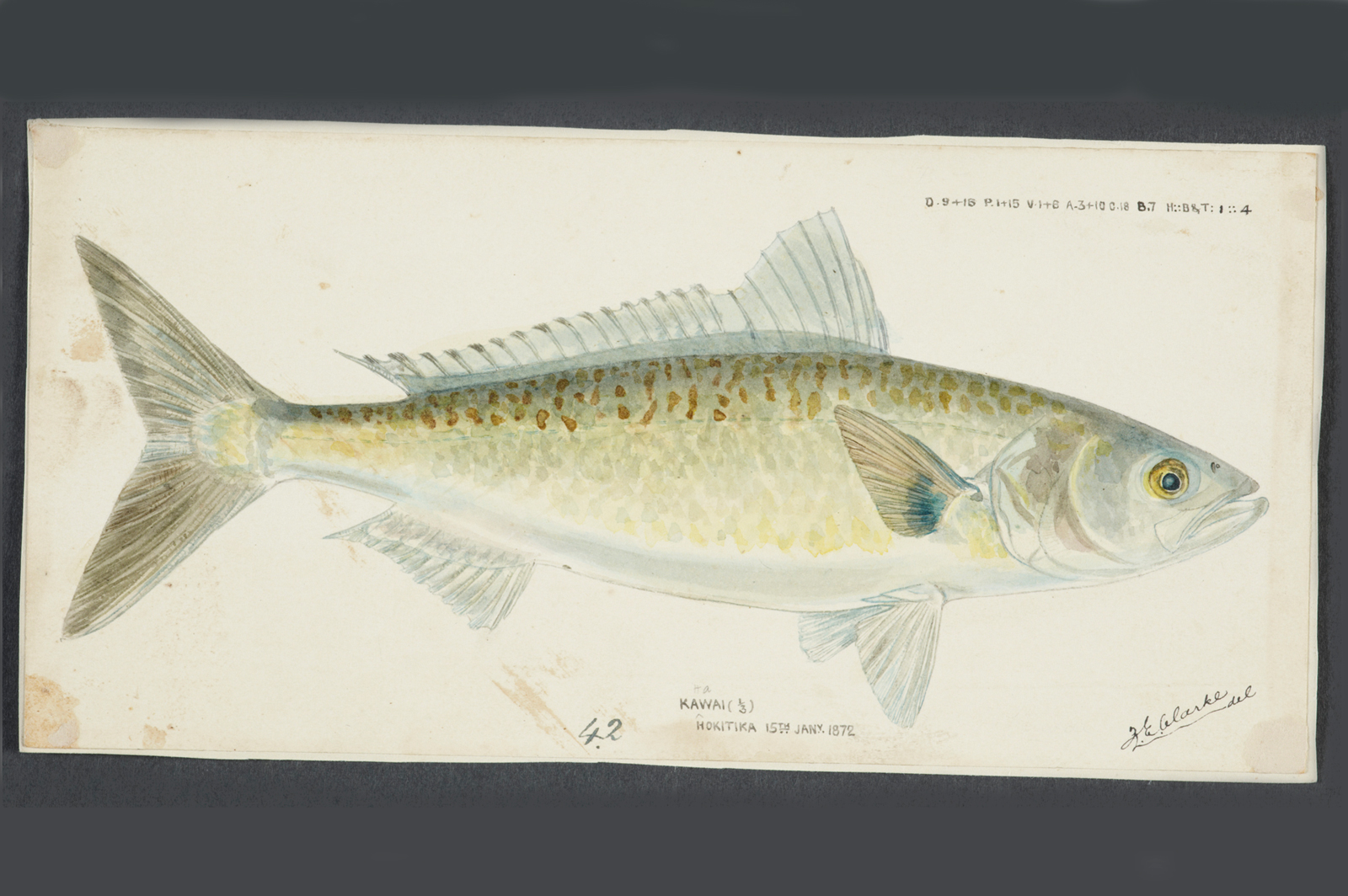
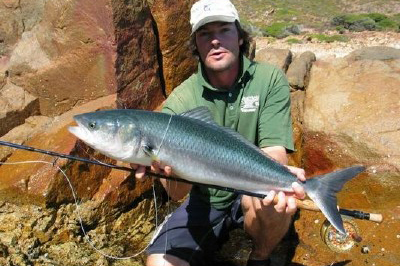
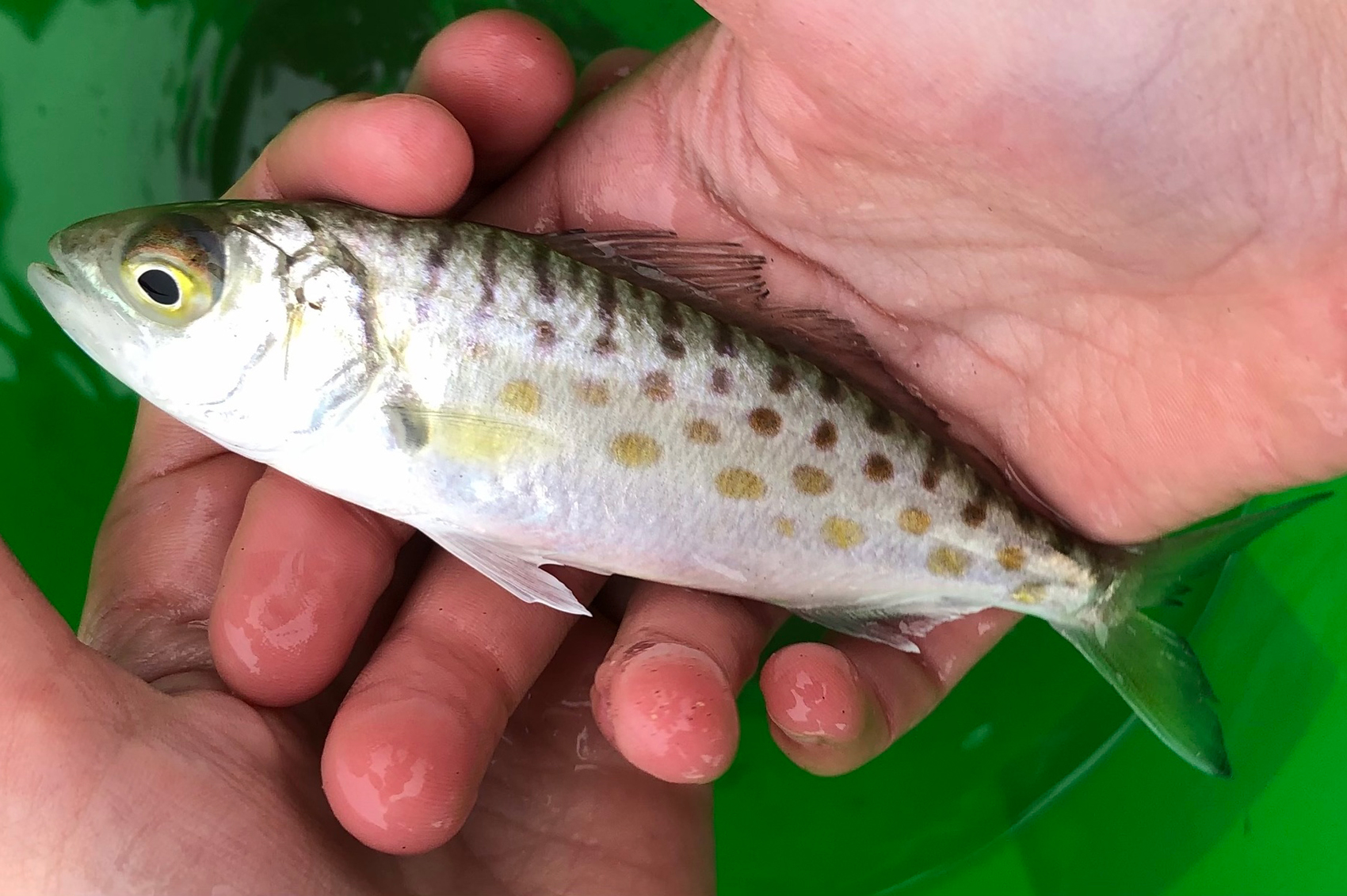
A popular sports fish with a dark bluish-green to olive-green body, and indistinct rows of dark spots forming narrow irregular bands along the upper sides. Juveniles have golden bars on the upper sides that break up into spots in larger individuals, a yellowish pectoral fin with a black basal spot, and a black margin on the caudal fin. The scales of Eastern Australian Salmon feel smooth to touch, especially those of large fish.
Eastern Australian Salmon schooling at Bawley Point, New South Wales.
Video of juvenile Eastern Australian Salmon in the surf at the mouth of the Thurra River, Croajingolong National Park, Victoria.
Video on Australian Salmon research by FRDC (Arripis trutta): population structure, reproduction, diet and composition of commercial & recreational catches in New South Wales.
Eastern Australian Salmon, Arripis trutta (Forster 1801)
More Info
|
Distribution |
Moreton Bay, southern Queensland, to Victoria, northern Tasmania, and west to at least Coffin Bay, South Australia. Also the Lord Howe Province and Norfolk Island in the Tasman Sea. The species is abundant in New Zealand, ranging north to the Kermadec Islands, and east to the Chatham Islands. Eastern Australia Salmon undertake migrations of up to thousands of kilometres, forming vast schools along oceanic beaches and exposed areas coastal areas. Juveniles form smaller schools in bays and estuaries, mostly in the southern part of their range. |
|
Features |
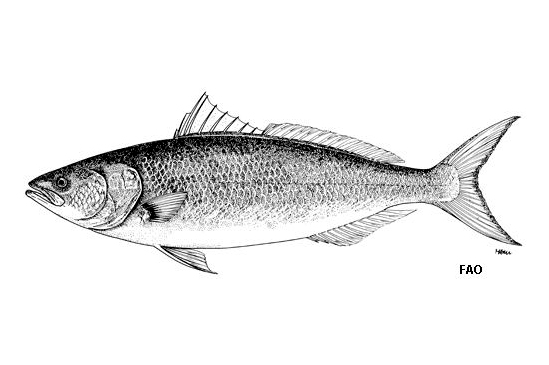
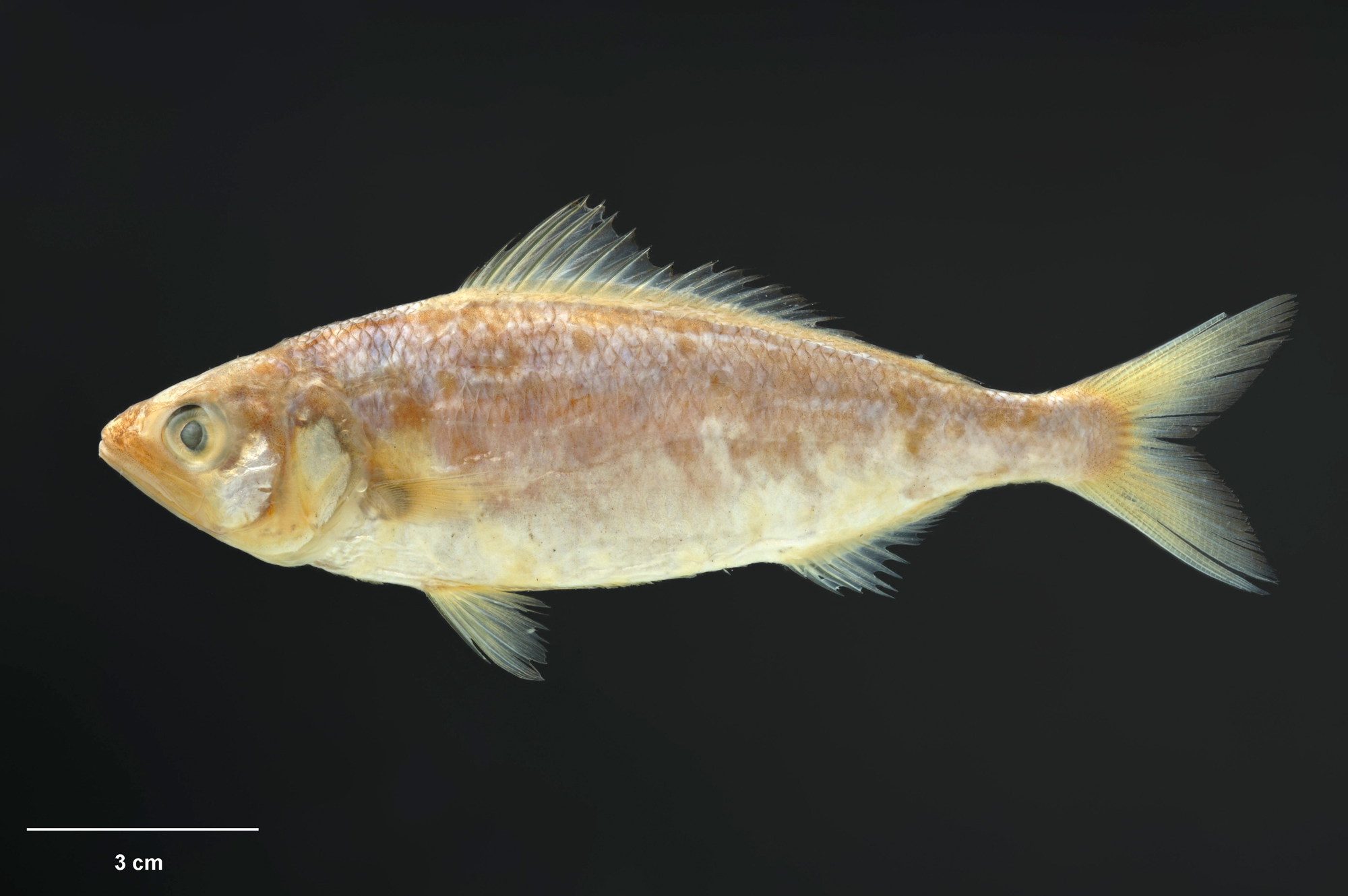
Dorsal fin IX, 15-16; Anal fin III, 9-10; Pectoral fin 16-18; Lateral line 49-53; Gill rakers on first gill arch 33-40; Vertebrae 25. Body long, slender, streamlined; edge of bone under before eye with prominent serrations in smaller fish; scales smooth to touch in large fish. Length of caudal fin lobe about equal to head length. |
|
Size |
|
|
Colour |
Dark blue green above, silvery white below, with golden bars on the upper sides in juveniles that break up into large spots in slightly larger individuals, a bright yellow pectoral fin bright yellow, and caudal and spinous portion of dorsal fin with a blackish margin. |
|
Feeding |
Feeds mostly on small pelagic baitfish, and also on pelagic crustaceans such as krill. |
|
Biology |
Matures at about 4 years of age at about 39 cm. Spawns in the surf zone between Lakes Entrance and Bermagui during late spring and summer. Large migratory schools are often seen moving along the open coast, and juveniles may be found in bays and estuaries. |
|
Fisheries |
Commercially fished in New South Wales, Victoria and Tasmania, and taken mostly with purse-seine and beach haul nets. This highly-prized fighting fish is also taken with rod and reel using baited hooks and spinning lures. Considered to be a strong-flavoured fish with relatively dark pink flesh. |
|
Similar Species |
Very similar to and difficult to distinguish from the Western Australian Salmon, Arripis truttaceus. The species differ in gill rakers counts - Eastern Australian Salmon have 33 or more gill rakers on the first arch, vs 31 or fewer gill rakers in the Western Australian Salmon. |
|
Etymology |
The specific name is from the Latin trutta (= trout), presumably referring to “Salmon-peel” (young salmon), the name among British sailors when the species was described. |
|
Species Citation |
Sciaena trutta Forster, 1801, Systema Ichthyologiae: 542. Type locality: Wellington Harbour, New Zealand, 41°16'S, 174°53'E (neotype). |
|
Author |
Bray, D.J. 2025 |
|
Resources |
Eastern Australian Salmon, Arripis trutta (Forster 1801)
References
Allan, R. 2002. Australian Fish and How to Catch Them. Sydney : New Holland Publishers (Australia) 394 pp.
Allen, G.R., Hoese, D.F., Paxton, J.R., Randall, J.E., Russell, B.C., Starck, W.A., Talbot, F.H. & Whitley, G.P. 1976. Annotated checklist of the fishes of Lord Howe Island. Records of the Australian Museum 30(15): 365-454 figs 1-2
Baker, A.N. 1971. Food and feeding of Kahawai (Teleostei: Arripididae). New Zealand Journal of Marine and Freshwater Research 5(2): 291–299.
Catalano, S. & Hutson, K. 2010. Harmful parasitic crustaceans infecting wild arripids: A potential threat to southern Australian finfish aquaculture. Aquaculture 303: 101-104 https://doi.org/10.1016/j.aquaculture.2010.03.005
Catalano, S., Hutson, K., Ratcliff, R. & Whittington, I. 2011. The value of host and parasite identification for arripid fish. Marine and Freshwater Research 62: 72-82. https://doi.org/10.1071/MF10193
Cuvier, G.L. in Cuvier, G.L. & Valenciennes, A. 1828. Histoire Naturelle des Poissons. Paris : Levrault Vol. 2 xxi, 2 + 490 pp., pls 9-40. (as Perca marginata) See ref at BHL
Duffy, C.A.J. & Petherick, C. 1999. A new size record for kahawai (Arripis trutta) from New Zealand. New Zealand Journal of Marine and Freshwater Research 33: 356–69.
Edgar, G.J. 2000. Australian Marine Life: the plants and animals of temperate waters. Sydney : Reed New Holland 544 pp.
Edgar, G.J. 2008. Australian Marine Life: the plants and animals of temperate waters. Sydney : Reed New Holland 2, 624 pp.
Edgar, G.J. & Shaw, C.J. 1995. The production and tropic ecology of shallow-water fish assemblages in Southern Australia. II. Diets of fishes and tropic relationships between fishes and benthos at Western Port, Victoria. Journal of Experimental Marine Biology and Ecology 194: 83-106.
Eggleston, D. 1975. Determination of age of Kahawai Arripis trutta (Bloch & Schneider). New Zealand Journal of Marine and Freshwater Research 9: 293–298.
Forster in Bloch, M.E. & Schneider, J.G. 1801. Systema Ichthyologiae Iconibus ex Illustratum. Berlin. 584 pp. 110 pls
Foster, E.G., D.A. Ritz, J.E. Osborn & K.M. Swadling. 2001. Schooling affects the feeding success of Australian salmon (Arripis trutta) when preying on mysid swarms (Paramesopodopsis rufa). Journal of Experimental Marine Biology and Ecology 261: 93-106.
Francis, M. 1993. Checklist of the coastal fishes of Lord Howe, Norfolk, and Kermadec Islands, southwest Pacific Ocean. Pacific Science 47(2): 136-170 figs 1-2
Grant, E.M. 1991. Fishes of Australia. Brisbane : EM Grant Pty Ltd 480 pp.
Hughes, J.M., Stewart, J., Lyle, J.M. & Suthers, I.M. 2014. Top-down pressure on small pelagic fish by eastern Australian salmon Arripis trutta; estimation of daily ration and annual prey consumption using multiple techniques, Journal of Experimental Marine Biology and Ecology 459: 190-198. http://dx.doi.org/10.1016/j.jembe.2014.05.026
Hutchins, J.B. 2001. Arripidae, p. 3304 in Carpenter, K.E. & Niem, V.H. (eds) The Living Marine Resources of the Western Central Pacific. FAO Species Identification Guide for Fisheries Purposes. Rome : FAO Vol. 5 2791-3379 pp.
Hutchins, J.B. & Swainston, R. 1986. Sea Fishes of Southern Australia. Complete field guide for anglers and divers. Perth : Swainston Publishing 180 pp.
Johnson, J.W. 2010. Fishes of the Moreton Bay Marine Park and adjacent continental shelf waters, Queensland, Australia. pp. 299-353, in Davie, P.J.F. & Phillips, J.A. Proceedings of the Thirteenth International Marine Biological Workshop, The Marine Fauna and Flora of Moreton Bay. Memoirs of the Queensland Museum 54(3)
Kailola, P.J., Williams, M.J., Stewart, P.C., Reichelt, R.E., McNee, A. & Grieve, C. 1993. Australian Fisheries Resources. Canberra : Bureau of Resource Sciences and the Fisheries Research and Development Corporation 422 pp.
Kuiter, R.H. 1993. Coastal Fishes of South-eastern Australia. Bathurst : Crawford House Press 437 pp.
MacDonald, C.M. 1983. Population, taxonomic and evolutionary studies on marine fishes of the genus Arripis (Perciformes: Arripidae). Bulletin of Marine Science 33(3): 780.
Malcolm, W.B. 1969. The populations of Australian 'Salmon', Arripis trutta (Bloch & Schneider), in Australian waters. Australian Journal of Marine and Freshwater Research 10(1): 22-29
May, J.L. & Maxwell, J.G.H. 1986. Field Guide to Trawl Fish from Temperate Waters of Australia. Hobart : CSIRO Division of Marine Research 492 pp.
Moore, G.I. 2012. Aspects of the evolutionary history of a pair of fish species (Arripidae: Arripis) on either side of a biogeographic barrier in southern Australian seas. Ph. D. Thesis. Murdoch University, Western Australia. http://researchrepository.murdoch.edu.au/8476/
Moore, G.I. & Chaplin, J.A. 2013. Population genetic structures of three congeneric species of coastal pelagic fishes (Arripis: Arripidae) with extensive larval, post-settlement and adult movements. Environmental Biology of Fishes 96: 1087–1089. https://doi.org/10.1007/s10641-012-0105-3
Moore, G.I. & Chaplin, J.A. 2014. Contrasting demographic histories in a pair of allopatric, sibling species of fish (Arripidae) from environments with contrasting glacial histories. Marine Biology 161: 1543–1555. https://doi.org/10.1007/s00227-014-2439-1
Neira, F.J. Miskiewicz, A.G. & Bruce, B.D. 1997. Larvae of five fish families with pattern 10 of the ramus lateralis accessorius nerve (Arripidae, Girellidae, Kyphosidae, Microcanthidae and Scorpididae): relevance to relationships. Bulletin of Marine Science 60(1): 117-138. See ref online
Neira, F.J., Miskiewicz, A.G. & Trnski, T. 1998. Larvae of temperate Australian fishes: laboratory guide for larval fish identification. University of Western Australia Press. 474 pp.
Nicholls, G. 1973. Growth of the Australian 'salmon' Arripis trutta (Bloch & Schneider). Australian Journal of Marine and Freshwater Research 24(2): 159-176.
Paulin, C. 1993. Review of the Australasian fish family Arripidae (Percomorpha), with the description of a new species. Australian Journal of Marine and Freshwater Research 44(2): 459-471 https://doi.org/10.1071/MF9930459
Richardson, J. 1839. Account of a collection of fishes from Port Arthur, Van Diemen's Land. Proceedings of the Zoological Society of London 7: 95-100 (described as Centropristis salar) See ref at BHL
Robertson, A.I. 1982. Population dynamics and feeding ecology of juvenile Australian salmon (Arripis trutta) in Western Port, Victoria. Australian Journal of Marine and Freshwater Research 33(2): 369-375.
Russell, B.C. 1983. The food and feeding habits of rocky reef fish of north-eastern New Zealand. New Zealand Journal of Marine and Freshwater Research 17(2): 121-145.
Stewart, J., Hughes, J., McAllister, J., Lyle, J. & Macdonald, M. 2011. Australian salmon (Arripis trutta): Population structure, reproduction, diet and composition of commercial and recreational catches. FRDC Project Nos. 2006/018 and 2008/056. Industry & Investment NSW – Fisheries Final Report Series No. 129, 260 pp
Thominot, A. 1880. Note sur un poisson de genre nouveau appartenant a la famille des scombéroidés, voisin des sérioles. Bulletin de la Société Philomathique de Paris 7(4): 173-174 (described as Lepidomegas muelleri)
Trnski, T. & Roberts, C.D. 2015. 194 Family Arripidae. pp. 1331-1333 in Roberts, C.D., Stewart, A.L. & Struthers, C.D. (eds). The Fishes of New Zealand. Wellington : Te Papa Press Vol. 4 pp. 1153-1748.
Waite, E.R. 1909. A list of the known fishes of Kermadec and Norfolk Islands, and a comparison with those of Lord Howe Island. Transactions of the New Zealand Institute 42: 370-383.