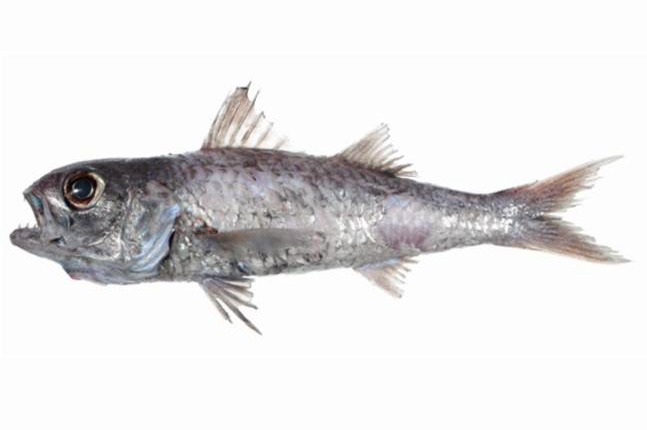
Glowbelly Seabass, Synagrops japonicus (Döderlein 1883)
Other Names: Glowbelly
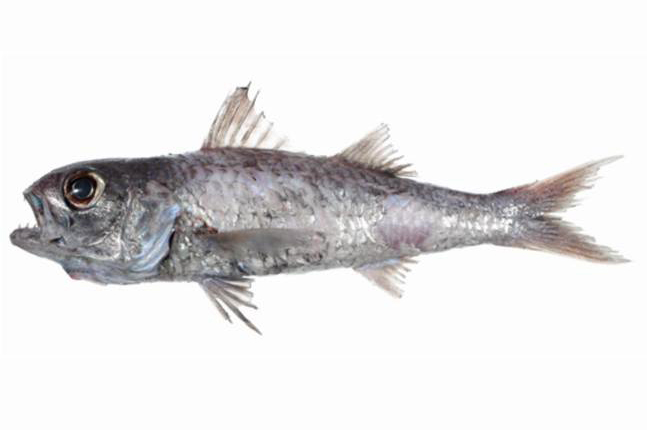
Glowbelly Seabass, Synagrops japonicus. Source: Australian National Fish Collection, CSIRO. License: CC By Attribution-NonCommercial
Summary:
A blackish-brown to black seabass becoming paler below, with paler ventrally in adults. The roof of the mouth is black, especially in large specimens, and the lower portion of the tongue is light-colored. Some individuals have a black mouth, with a greyish coloration and patches of white spots on the tongue.
Cite this page as:
Bray, D.J. 2025, Synagrops japonicus in Fishes of Australia, accessed 15 Sep 2026, https://fishesofaustralia.net.au/Home/species/3236
Glowbelly Seabass, Synagrops japonicus (Döderlein 1883)
More Info
|
Distribution |
North-west of Bunbury, Western Australia, to off the Joseph Bonaparte Gulf, Northern Territory, and east of Cape York, Queensland, to off Mallacoota, Victoria; also the Norfolk Island Province in the Tasman Sea. Elsewhere the species occurs in the tropical and subtropical Indo-west-central Pacific. |
|
Features |
Dorsal fin IX, I,9; Anal fin II,7; Pectoral fin 15-16; Pelvic fin I,5; Gill rakers 3 + 9-10; lateral scales 29-32; Vertebrae 25. Body elongate, compressed, depth depth 22.6–26.2%SL; 3-6 canine teeth on side of lower jaw; scales large, cycloid. |
|
Colour |
|
|
Feeding |
Feeds on crustaceans, fishes and cephalopods. |
|
Etymology |
The specific name refers to the type locality: Tokyo, Japan. |
|
Species Citation |
Melanostoma japonicum Döderlein in Steindachner & Döderlein 1883, Anzeiger der Akademie der Wissenschaften in Wien 20(15): 124. Type locality: Tokyo, Japan. |
|
Author |
Bray, D.J. 2025 |
|
Resources |
Glowbelly Seabass, Synagrops japonicus (Döderlein 1883)
References
Döderlein, L. 1883. in Steindachner, F. & Döderlein, L. 1883. Beiträge zur Kenntniss der Fische Japan's (II). Anzeiger der Akademie der Wissenschaften in Wien 20(15): 123-125
Döderlein, L. 1883. in Steindachner, F. & Döderlein, L. Beiträge zur Kenntniss der Fische Japan's (II). Denkschriften der Akademie der Wissenschaften in Wien 48: 1–40 pls 1–7
Gloerfelt-Tarp, T. & Kailola, P.J. 1984. Trawled Fishes of Southern Indonesia and Northwest Australia. Jakarta : Dir. Gen. Fish. (Indonesia), German Tech. Coop., Aust. Dev. Ass. Bur. 406 pp.
Günther, A. 1887. Report on the deep-sea fishes collected by H.M.S Challenger during the years 1873–1876. Report on the Scientific Results of the Voyage of H.M.S. Challenger 1873–1876, Zoology 22(57): 1-268 figs 1-7 pls 1-66
Iwamoto, T. 2015. Synagrops japonicus. The IUCN Red List of Threatened Species 2015: e.T42830204A42837235. https://dx.doi.org/10.2305/IUCN.UK.2015-4.RLTS.T42830204A42837235.en. Accessed on 29 July 2025.
Mediodia, D. P., Chang, C.-H., Ho, H.-C., Přikryl, T. & Lin, C.-H. 2024. A new cryptic species of splitfin fish from Taiwan with revision of the genus Synagrops (Acropomatiformes: Synagropidae). Zoological Studies 63: 1-16. https://doi.org/10.6620/ZS.2024.63-20
Schwarzhans, W.W. & Prokofiev, A.M. 2017. Reappraisal of Synagrops Günther, 1887 with rehabilitation and revision of Parascombrops Alcock, 1889 including description of seven new species and two new genera (Perciformes: Acropomatidae). Zootaxa 4260 (1): https://doi.org/0.11646/zootaxa.4260.1.1