- Classification
- ACTINOPTERYGII
- SILURIFORMES
- PLOTOSIDAE
- Tandanus
- bellingerensis
Wilang, Tandanus bellingerensis Welsh, Jerry, Burrows & Rourke 2017
Other Names: Bellinger Catfish
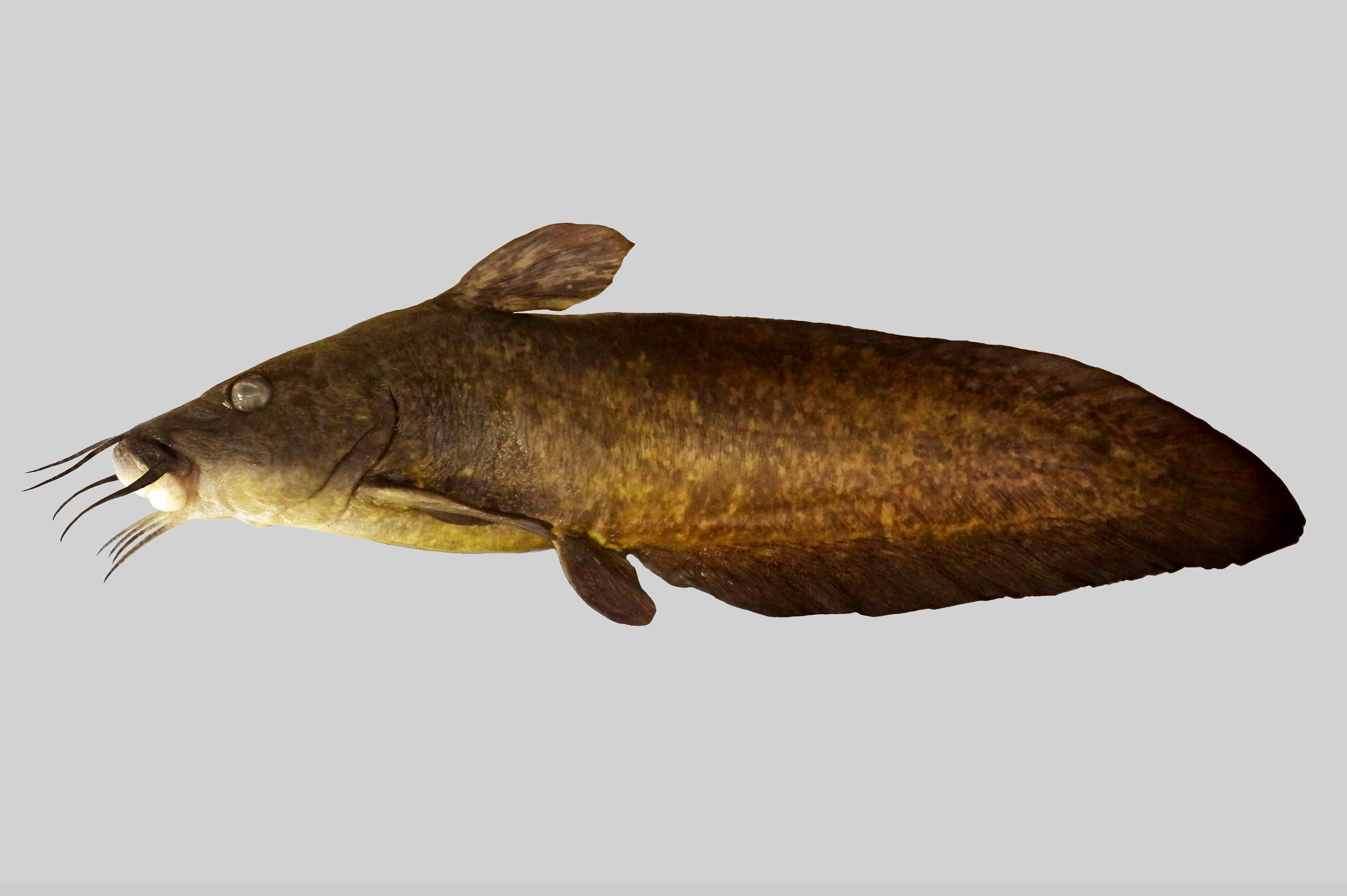
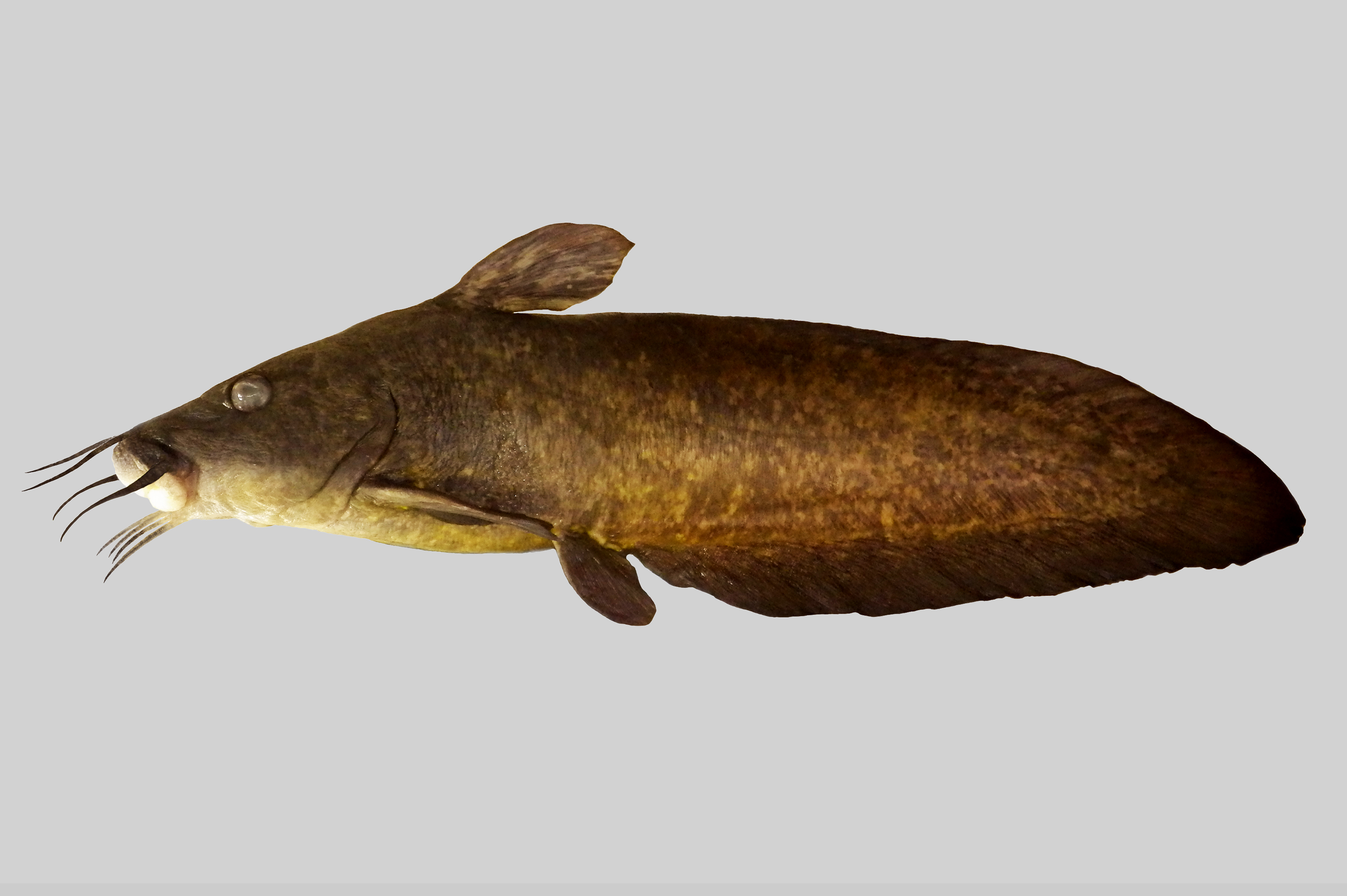
Holotype of the Wilang, Tandanus bellingerensis, from the Bellinger River, New South Wales. Source: Stuart Welsh. License: All rights reserved
Summary:
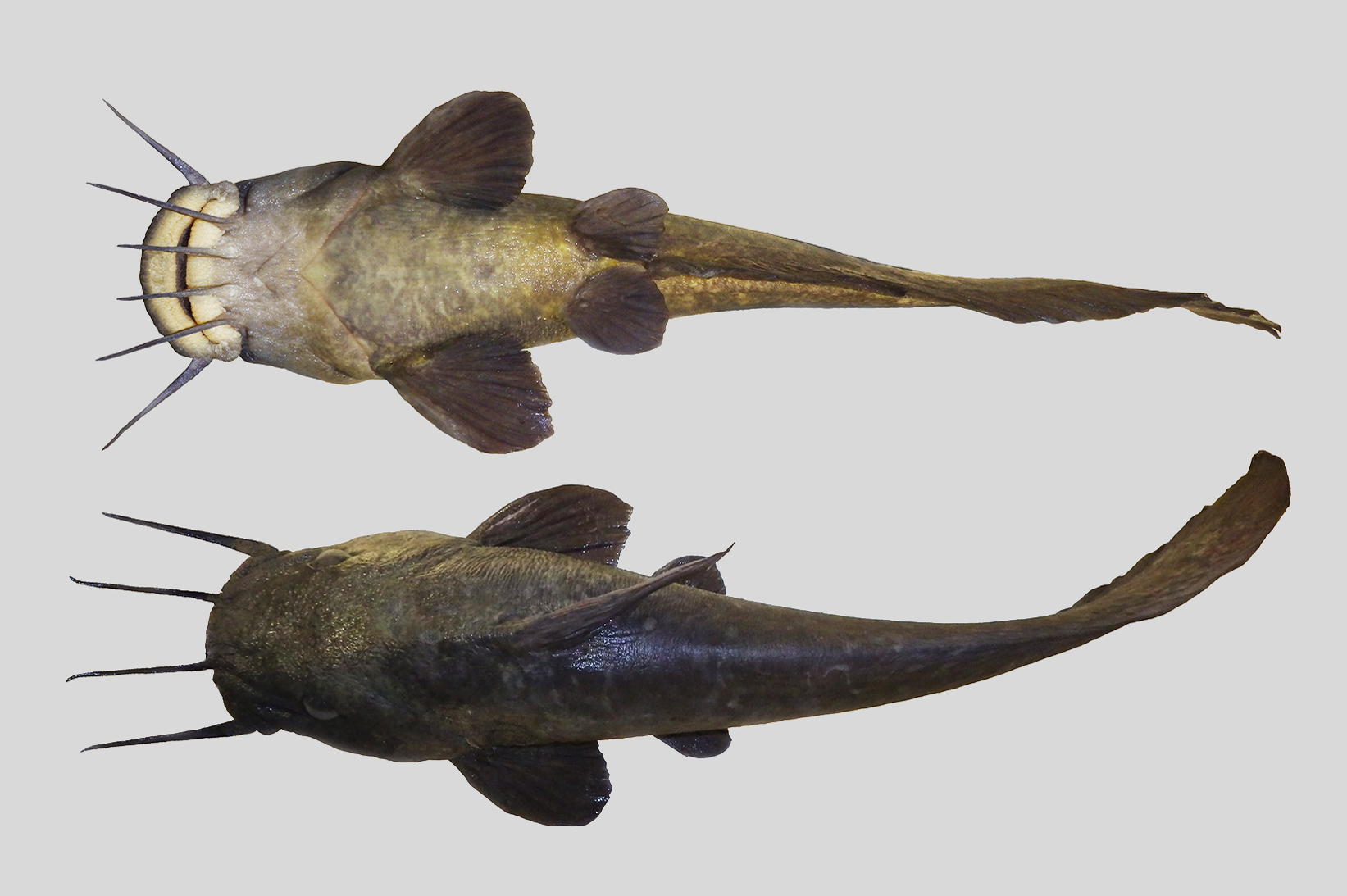
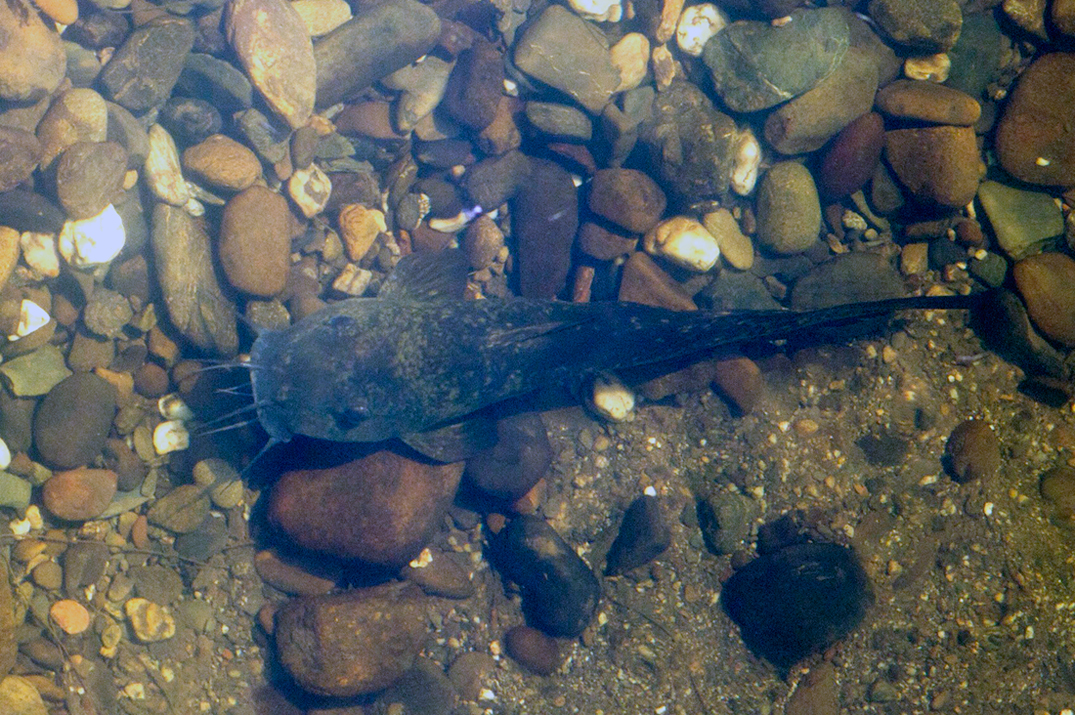
A mottled or uniform dark to light brown catfish with a dirty white, yellow, or yellowish brown underside, often mottled on the breast and abdomen, maxillary and nasal barbels completely dark, and the inner and outer mandibular barbels white or dirty-white at the base, becoming dark distally. The dorsal fin is dark brown, yellowish brown, or light brown and often mottled, the pectoral and pelvic fins range from dark brown to yellowish brown, and the caudo-dorsal and anal fins are dark brown, yellowish brown, or light brown, and often mottled.
Cite this page as:
Bray, D.J. 2025, Tandanus bellingerensis in Fishes of Australia, accessed 18 Sep 2026, https://fishesofaustralia.net.au/home/species/5360
Wilang, Tandanus bellingerensis Welsh, Jerry, Burrows & Rourke 2017
More Info
|
Distribution |
Endemic to the Bellinger, Macleay, Hastings, and Manning rivers of the mid-north coast of New South Wales. |
|
Features |
Dorsal fin 5-6; Pectoral fin 9-10; Pelvic fin 11-13; Dorsal-caudal-anal-fin rays 153-169; Gill rakers on first arch 35-39; Pectoral spine serrae 8-14. |
|
Similar Species |
Differs from other species of Tandanus by having a combination of the following characters: a high count of rays in the continuous caudodorsal and anal fins (153–169), a high gill raker count on the first arch (35–39), and strongly recurved posterior serrae of the pectoral-fin spine. |
|
Etymology |
The species is named bellingerensis in reference to the Bellinger River drainage, where this taxon was first recognized as an undescribed species based on genetic evidence. The common name ‘‘Wilang’’ (pronounced ‘‘Wilung’’) is based on the traditional name for catfish in the Gathang Language Group, the language of the Birrbay, Warrimay, and Guringay people. This name is also used by the Dhanggati Language Group. |
|
Species Citation |
Tandanus bellingerensis Welsh, Jerry, Burrows & Rourke 2017, Copeia 105(2): 230, Figs 1-3. Type locality: Bellinger River at mouth of Kip Creek on Darkwood Road, approx. 26 km W of Bellingen, New South Wales, 30 26 39.8 S, 152 37 14.1 E. |
|
Author |
Bray, D.J. 2025 |
|
Resources |
Wilang, Tandanus bellingerensis Welsh, Jerry, Burrows & Rourke 2017
References
Gilligan, D. & Butler, G. 2019. Tandanus bellingerensis. The IUCN Red List of Threatened Species 2019: e.T122902013A123382076. https://dx.doi.org/10.2305/IUCN.UK.2019-3.RLTS.T122902013A123382076.en. Downloaded on 10 August 2020.
Jerry, D.R. 2008. Phylogeography of the freshwater catfish Tandanus tandanus (Plotosidae): a model species to understand evolution of the eastern Australian fish fauna. Marine and Freshwater Research 59: 351–360. https://doi.org/10.1071/MF07187
Jerry, D.R. & Woodland, D.J. 1997. Electrophoretic evidence for the presence of the undescribed ‘Bellinger' catfish (Tandanus sp.) in four New South Wales mid-northern coastal rivers. Marine and Freshwater Research 48: 235–240. https://doi.org/10.1071/MF95141
Rourke, M.L. & Gilligan, D.M. 2015. Complex biogeography and historic translocations lead to complicated phylogeographic structure of freshwater eel-tailed catfish (Tandanus spp.) in south-eastern Australia. Conservation Genetics 16: 777–790. https://doi.org/10.1007/s10592-015-0699-z
Welsh, S.A., Jerry, D.R. & Burrows, D.W. 2014. A New Species of freshwater eel-tailed catfish of the genus Tandanus (Teleostei: Plotosidae) from the wet tropics region of eastern Australia. Copeia 2014(1): 136–142 https://doi.org/10.1643/CI-13-067
Welsh, S.A., Jerry, D.R., Burrows, D.W. & Rourke, M.L. 2017. A New Species of Freshwater Eel-tailed Catfish of the Genus Tandanus (Teleostei: Plotosidae) from Coastal Rivers of Mid-northern New South Wales, Australia. Copeia 105(2): 229–236 https://doi.org/10.1643/CI-16-547