Omox Blenny, Omox biporos Springer 1972
Other Names: Doublepore Blenny
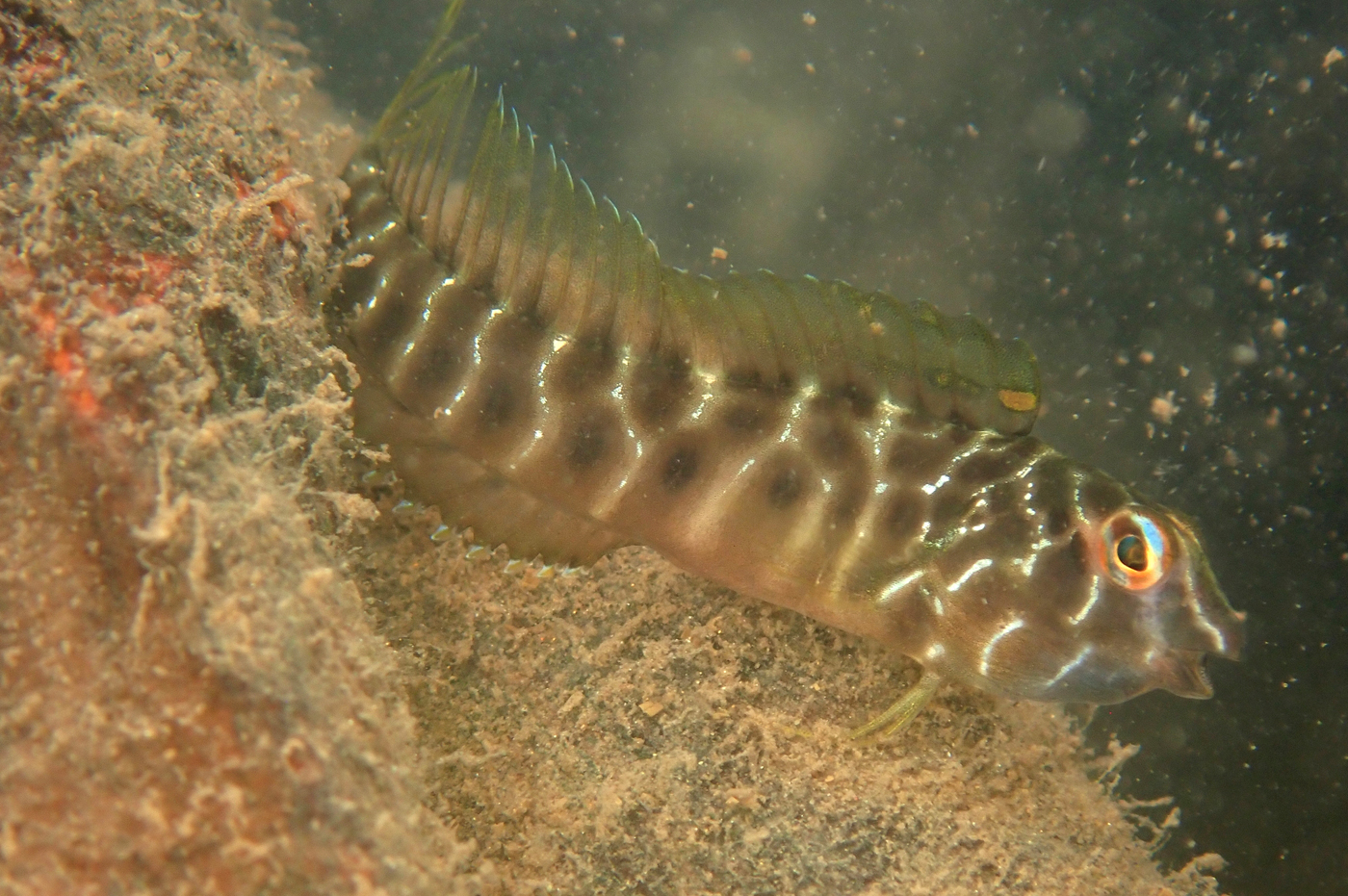
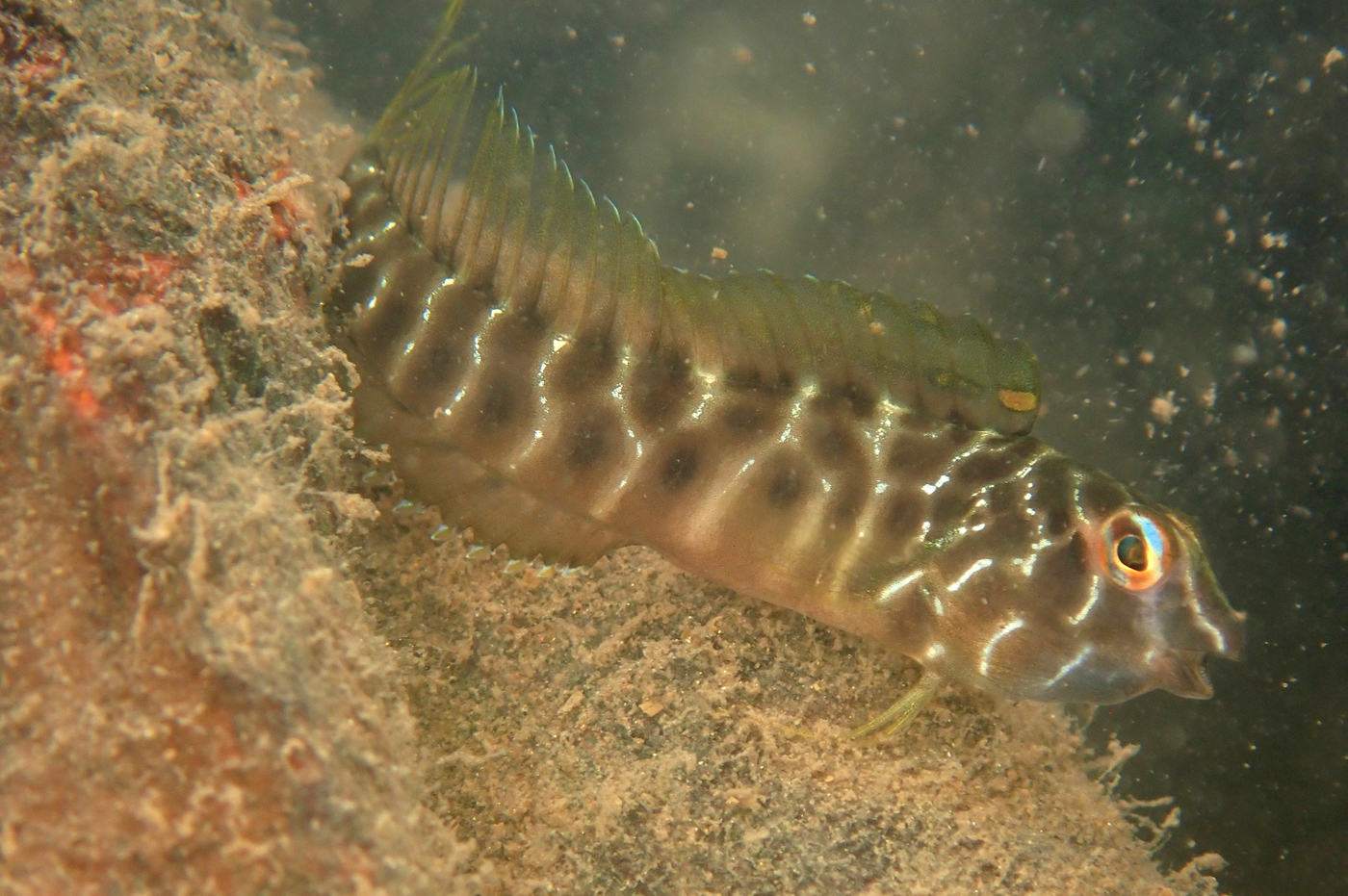
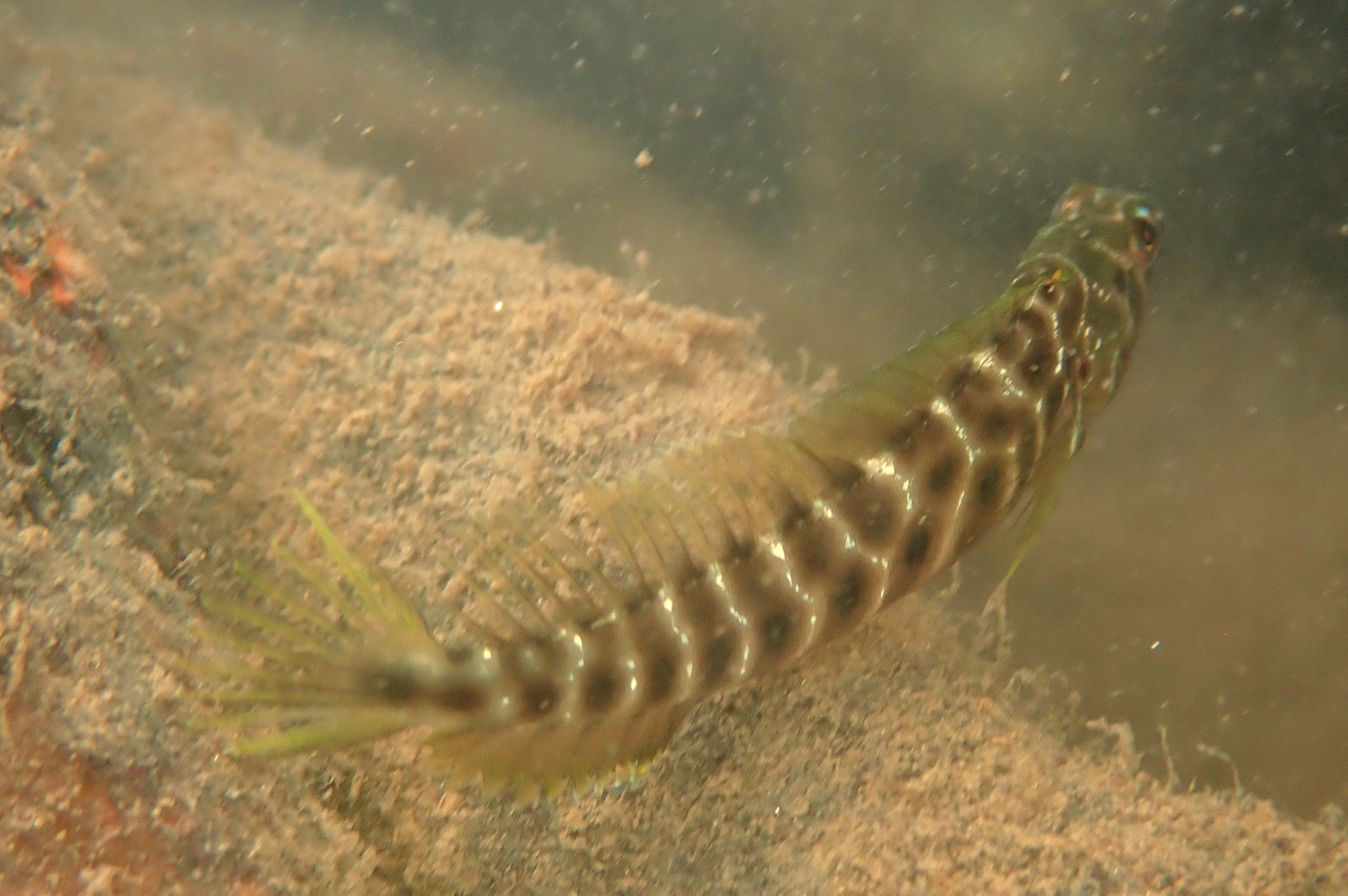
A female Omox Blenny, Omox biporos, in New Caledonia, January 2015. Source: Amaury Durbano / iNaturalist.org. License: CC by Attribution-NonCommercial
Summary:
A dark brown blenny with black blotches along the side, black bars on the head, and clear fins.
Cite this page as:
Bray, D.J. 2025, Omox biporos in Fishes of Australia, accessed 15 Oct 2026, https://fishesofaustralia.net.au/home/species/1080
Omox Blenny, Omox biporos Springer 1972
More Info
|
Distribution |
SW of Cape Rulhieres, King George River, the Kimberley, Western Australia, to Great Keppel Island, Queensland. Elsewhere the species is known from the east-Indo-west Pacific: Gulf of Thailand to the Ryukyu Islands, south to Australia, Papua New Guinea and New Caledonia, and from Palau to Pohnpei in Micronesia. Inhabits mangroves (sometimes very close to coral reefs), estuaries, and stream mouths. |
|
Features |
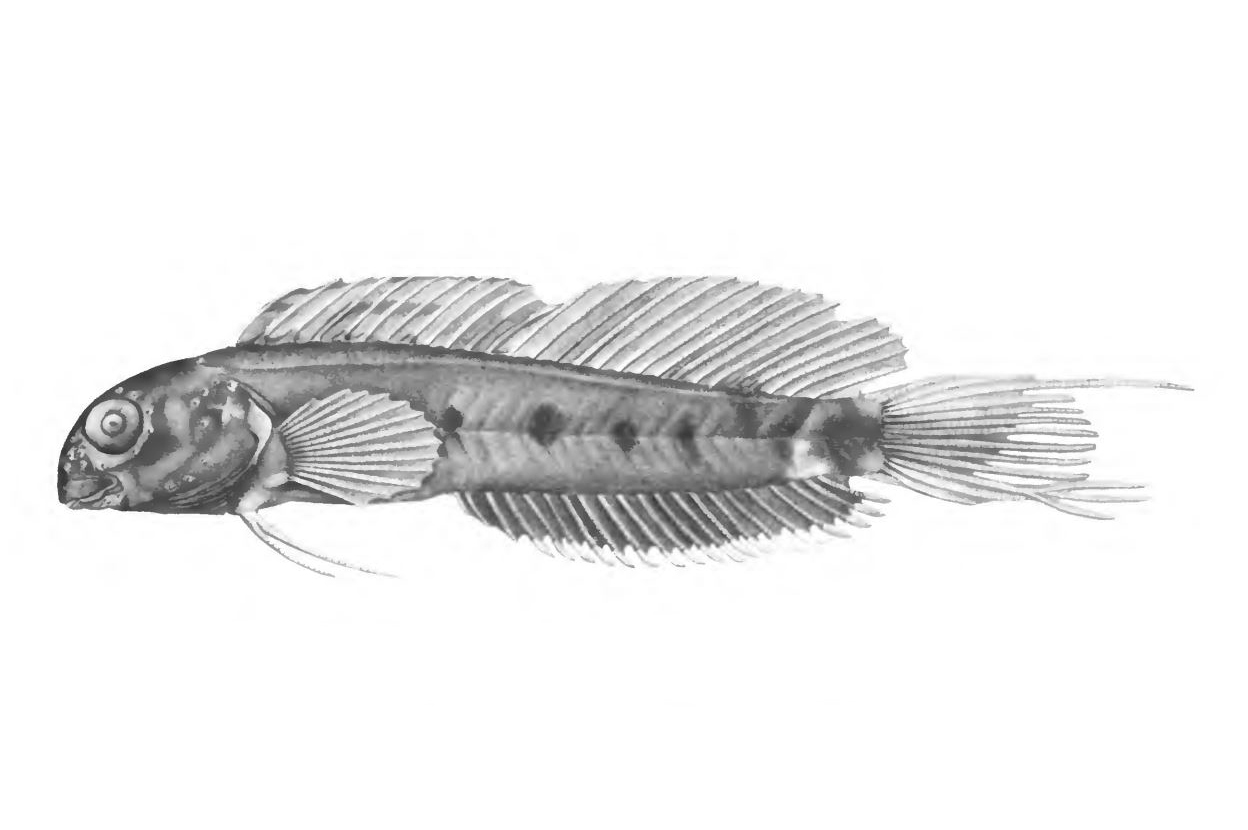
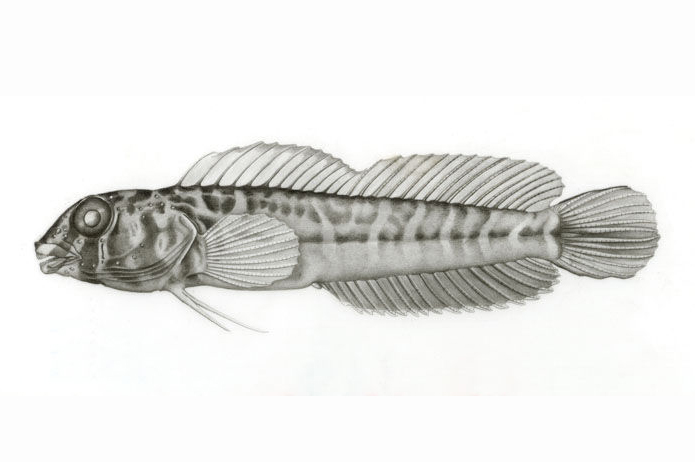
Dorsal fin XII, 15-17; Anal fin II, 17-19; Pectoral fin 13; Pelvic fins I, 2; Caudal fin (segmented rays) 13; Vertebrae 10 + 24-26; Sensory pores - circumorbital series 7-8 pores, mandibular series 3 pores, supratemporal-preoperculo-mandibular series 13 pores; interorbital sensory pores 3-4. Dorsal fin origin slightly in advance of level of gill opening, fin notched slightly above last one or two spines; tips of caudal fin rays and posterior dorsal fin rays filamentous in mature males only; dorsal and anal fins not attached to caudal fin; Lateral line absent on body. No cirri on head. Posterior nostril present, normal; Gill opening extending ventrally to opposite level of 8th to 11th from dorsal-most pectoral fin ray; shortest pelvic fin ray more than half length of longest ray. |
|
Colour |
In preservative (from Springer 1972): "Males - pattern variable; in specimens with most-developed pattern, 11 dark, vertical bands present on body separated by broader, paler interspaces; bands darker at midlevel; head with three or four dusky bands separated by paler interspaces; dorsal and anal fins generally dusky; dark spot or two or three dusky stripes present at anterior end of dorsal fin; tips of anal rays pale (swollen in mature males); caudal fin dusky centrally; dark mark basally on pectoral fin separated by pale area from dusky fleshy pectoral fin base; pelvic fins dusky. In males with least developed pattern the bands of the head and body are fewer in number and appear only as dark spots mid-laterally on the body. Females - similar to males, but dusky bands on body as broad or broader than pale interspaces; bands more distinctly developed than in males; no distinct marks on dorsal, pectoral, and caudal fins." |
|
Biology |
Females lay demersal, adhesive eggs that are attached to the substrate via a filamentous, adhesive pad or pedestal; larvae are planktonic. |
|
Etymology |
The specific name is "from the Latin bi and the Greek poros, meaning two-holed, in reference to the two sensory pores that appear, one on each side, just anterior to the dorsal fin origin". |
|
Species Citation |
Omox biporos Springer 1972, Smithsonian Contributions to Zoology 130: 11, figs 11, 14. Type locality: Southeast bay of Goh Mak Island, southwest of Trat Bay, 11°48'15"N, 102°29'08"E. east coast of Gulf of Thailand. |
|
Author |
Bray, D.J. 2025 |
|
Resources |
Omox Blenny, Omox biporos Springer 1972
References
Allen, G.R. & Erdmann, M.V. 2012. Reef fishes of the East Indies. Perth : Tropical Reef Research 3 vols, 1260 pp.
Larson, H.K., Williams, R.S. & Hammer, M.P. 2013. An annotated checklist of the fishes of the Northern Territory, Australia. Zootaxa 3696(1): 1-293 http://dx.doi.org/10.11646/zootaxa.3696.1.1
Larson, H., Williams, J., Smith-Vaniz, W.F. & Hastings, P. 2021. Omox biporos. The IUCN Red List of Threatened Species 2021: e.T196310A48373475. https://dx.doi.org/10.2305/IUCN.UK.2021-1.RLTS.T196310A48373475.en. Accessed on 14 July 2025.
Randall, J.E. 2005. Reef and shore fishes of the South Pacific. New Caledonia to Tahiti and the Pitcairn Islands. Honolulu : University of Hawaii Press 707 pp.
Springer, V.G. 1972. Synopsis of the tribe Omobranchini with descriptions of three new genera and two new species (Pisces : Blenniidae). Smithsonian Contributions to Zoology 130: 1-31. http://dx.doi.org/10.5479/si.00810282.130
Springer, V.G. 1981. Notes on blenniid fishes of the tribe Omobranchini, with descriptions of two new species. Proceedings of the Biological Society of Washington 94(3): 699-707 https://www.biodiversitylibrary.org/part/45948
Springer, V.G. & Gomon, M.F. 1975. Revision of the blenniid fish genus Omobranchus with descriptions of three new species and notes on other species of the tribe Omobranchini. Smithsonian Contributions to Zoology 177: 1-135 figs 1-52 http://dx.doi.org/10.5479/si.00810282.177